What to Eat in Budapest: The Must-Try Dishes, Picked by a Local
Every dish on this list is something I grew up eating. Here is what Budapest is actually famous for, where to try each one, and the tourist versions to walk past.
 Written with Gábor Kovács, Budapest local specialist and experience guide
Short answer
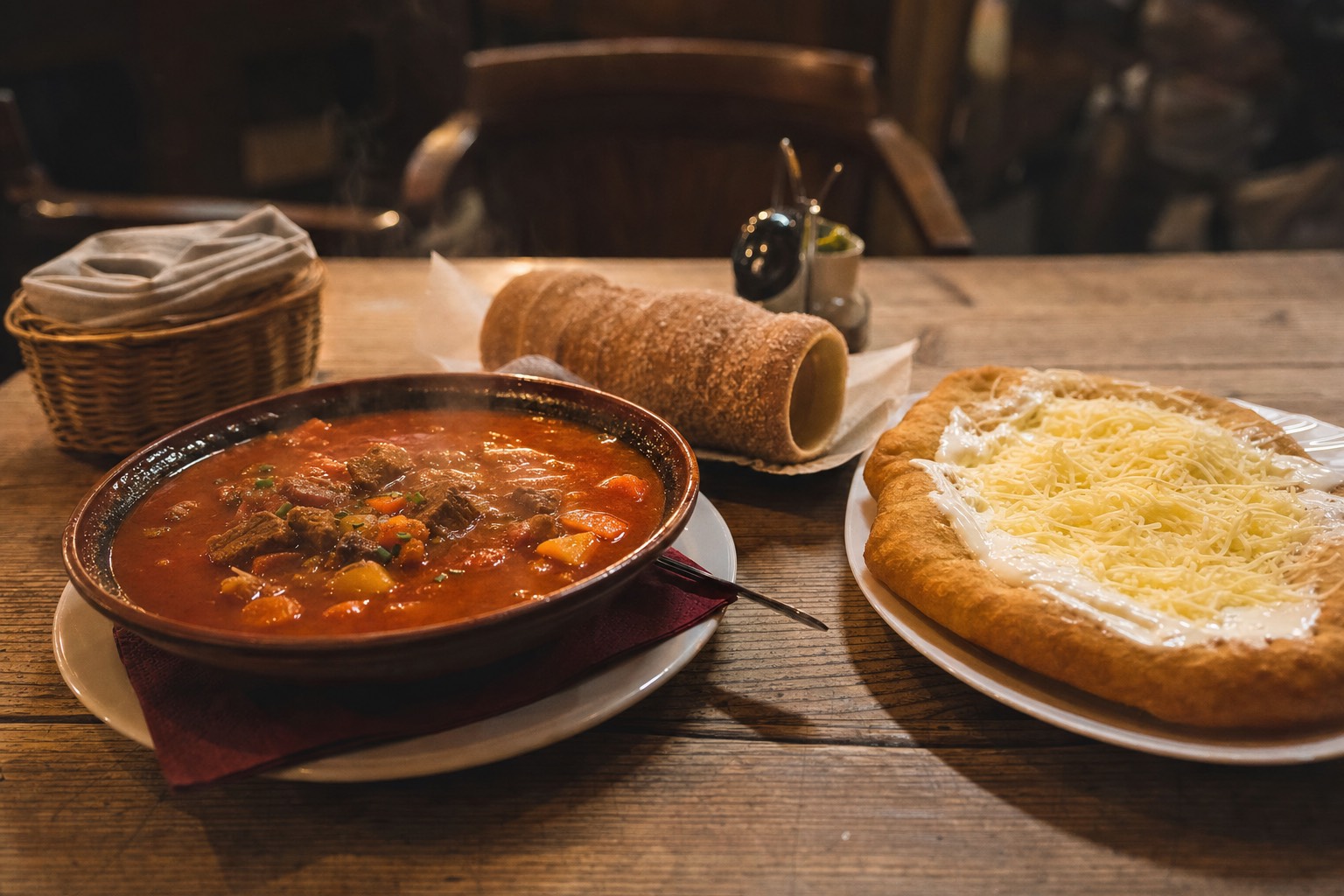
The must-try foods in Budapest are goulash (gulyás, a paprika beef soup), lángos (deep-fried flatbread with sour cream and cheese), chimney cake (kürtőskalács), paprikás csirke (chicken in paprika cream) and töltött káposzta (stuffed cabbage). Expect 4-8 EUR for goulash and 3-6 EUR for lángos depending on how touristy the address is.
The first thing I feed visiting friends is never in a restaurant. It is a lángos, a slab of deep-fried bread dough rubbed with garlic, from a market window, eaten standing up while the oil is still crackling on the surface. Then we argue about where the best goulash is, because every Hungarian family, mine included, believes theirs is the reference version. This is the list I actually use with guests, dish by dish, with honest prices and the places worth your stomach space.
Use the list for independent ordering. A guided tasting can cover several Hungarian classics in one route, while a cooking class trades breadth for a meal you make yourself.
Booking choice: Carpe Diem combines four Hungarian eateries and three drinks in a 150-minute guided route. Explore Carpe Diem District VII Food Walk
What Food Is Budapest Famous For?
Budapest is famous for goulash (gulyás), a paprika-rich beef and vegetable soup; lángos, a garlicky deep-fried flatbread; kürtőskalács (chimney cake), a caramelized spit-roasted pastry; paprikás csirke, chicken in paprika sour-cream sauce; and töltött káposzta, cabbage leaves stuffed with pork and rice. Paprika runs through almost all of it.
| Dish | What it is | Eat it as |
|---|---|---|
| Gulyás (goulash) | Beef, onion, paprika, potato and carrot in a soup, not a stew | Starter or light lunch |
| Lángos | Deep-fried flatbread, classically garlic, sour cream, cheese | Street-food lunch |
| Kürtőskalács (chimney cake) | Sweet dough wound on a spit, roasted, rolled in sugar | Walking dessert |
| Paprikás csirke | Chicken simmered in paprika and sour cream, with nokedli dumplings | Sit-down main |
| Töltött káposzta | Sour cabbage leaves stuffed with pork and rice | Hearty winter main |
| Halászlé | Fishermen's soup, hot-paprika river fish broth | Sit-down starter |
| Somlói galuska | Sponge, walnut, chocolate and rum trifle | Restaurant dessert |
| Dobos torta | Layered sponge cake with caramel top | Café stop |
Two warnings before you order. First, what most of the world calls "goulash", a thick stew, is called pörkölt (a slow paprika meat stew) here; gulyás is a soup. Second, chimney cake is street theatre and genuinely good, but it is Transylvanian by origin and a festival food by habit, so a fresh one from a busy stand beats any pre-made tourist version.
What Is The Deal With Goulash, And Is It Worth Ordering?
Absolutely, but order it where locals do. Real gulyás is a clear-ish paprika broth crowded with beef, carrot and potato, served as a starter. At neighborhood places a bowl runs 4-5 EUR; tourist terraces near Fisherman's Bastion charge 7-8 EUR for often thinner soup.
Those numbers are current: the 2026 price survey at Daiztrip's Budapest food price guide puts goulash at 4-8 EUR depending on the venue, with the tourist-zone premium sitting near double the neighborhood price. The paprika should be fragrant rather than aggressive, the beef should have spent hours in the pot, and there should be a hot-paprika paste on the side so you set your own fire.
I keep a whole page on the dish, its history and the best bowls in town in the goulash guide, including the pörkölt confusion that trips up half the menus in the center.
What Street Food Should You Try?
Lángos first, always. The classic order is garlic, sour cream and cheese, 3-4 EUR at markets and 5-6 EUR in tourist areas in 2026. After that: kolbász (paprika sausage) from a market grill, and a fresh chimney cake rolled in cinnamon sugar from a stand with a queue.
Lángos pricing tells you a lot about an address. Market stalls charge 3-4 EUR, tourist streets 5-6, and premium toppings add 1-2 EUR. At the polished end, Retro Lángos near Parliament and the Basilica charges exactly 3,490 HUF for its garlic-rubbed sajtos-tejfölös (cheese and sour cream) version, and publishes the price openly on its own menu page, including vegan and gluten-free versions at the same price. That is the expensive end of lángos, and you are paying for the location and the queue management, not a different recipe.
The full street-level tour of stands, windows and market counters lives in the street food guide. For the sweet side, my chimney cake hunt tracks down the stands that roast to order.
What Do Locals Actually Eat?
Not goulash every day. A real Budapest week runs on főzelék (thick vegetable stews eaten as a main), soups, sandwiches from the bakery, and one big family meal at the weekend. Lángos is a market-day or beach food. Chimney cake comes out at fairs and Christmas markets, not Tuesdays.
This is the part most food lists skip, so let me say it plainly: Hungarians treat the famous dishes as occasion food. Főzelék, a thick stew of peas, squash or potato with a fried topping, is the true local lunch, cheap and everywhere and almost never marketed to visitors. Weekday dinners look like the rest of Europe. What has changed lately is the range: the 2026 openings list from We Love Budapest highlights SHUK haCarmel bringing Israeli-inspired kosher street food to the scene, and vegan street food keeps growing, from Vegan Love's burgers to seasonal trucks frying vegan lángos.
If you want the cuisine's full architecture, regions, paprika grades and meal customs included, that is the job of the Hungarian food guide. This page stays on the plate in front of you.
Where Should You Try Each Dish?
Split the list by setting: goulash and paprikás csirke in a tavern or étkezde (a simple canteen-style eatery), lángos and kolbász at a market, chimney cake on the street, cakes in a grand café. One well-run food tour covers most of the list in an afternoon with the venues pre-picked.
| Dish | Best setting | Self-guided anchor |
|---|---|---|
| Goulash | Tavern or étkezde | Neighborhood spots in Districts VII-IX |
| Lángos | Market stall | Upstairs at the Great Market Hall, 4-5 EUR |
| Chimney cake | Street stand, festival | Stands that roast to order |
| Paprikás csirke | Traditional restaurant | Lunch menus beat dinner prices |
| Töltött káposzta | Traditional restaurant, winter | Portions are huge, share |
| Cakes and coffee | Grand café | Café culture pages cover the classics |
The Great Market Hall guide maps the single best building for tasting several of these under one roof, with goulash at 5-7 EUR and lángos at 4-5 EUR from the upstairs stalls.
How Much Do The Must-try Dishes Cost In 2026?
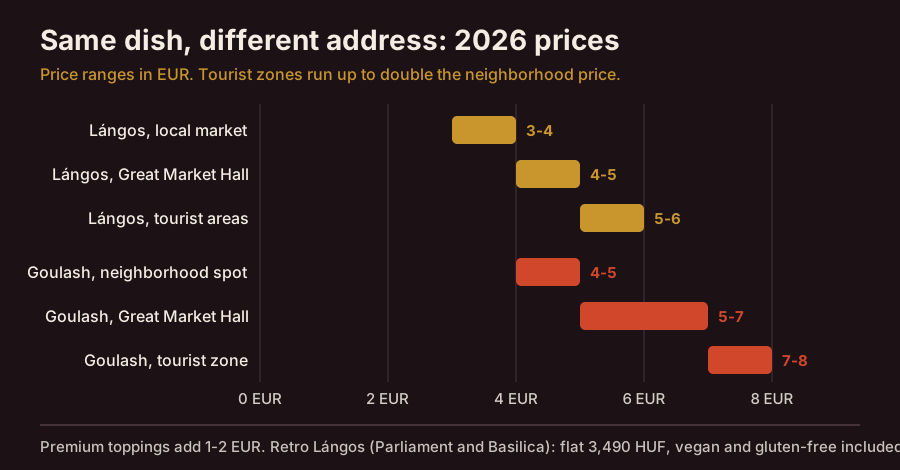
Budget 3-4 EUR for market lángos, 4-8 EUR for goulash, and roughly double the neighborhood price for anything served with a castle view. The gap between a local address and a tourist address is consistent across dishes, usually 40 to 100 percent.
| Dish and venue | 2026 price |
|---|---|
| Lángos, local market | 3-4 EUR |
| Lángos, Great Market Hall stalls | 4-5 EUR |
| Lángos, tourist areas | 5-6 EUR |
| Lángos, Retro Lángos (Parliament / Basilica) | 3,490 HUF flat |
| Goulash, neighborhood restaurant | 4-5 EUR |
| Goulash, Great Market Hall | 5-7 EUR |
| Goulash, tourist zone (Fisherman's Bastion area) | 7-8 EUR |
| Premium lángos toppings | +1-2 EUR |
Those figures track the 2026 surveys cited above, and they match my own receipts closely enough that I trust the ranges. Remember the szervizdíj (service charge, usually 12-15 percent added to restaurant bills): it is on the bill, not optional, and it changes how you tip.
What Should You Skip?
Skip restaurants with touts, photo menus and "traditional goulash" signs on the busiest pedestrian streets, pre-made chimney cakes reheated instead of roasted, and any lángos that costs tourist-street money without a queue of locals. None of it is dangerous, it is just the worst version of each dish at the highest price.
A few specific patterns I steer guests around. Terrace restaurants on the main tourist arteries often serve a thin, rushed gulyás at the top of the price range; the 7-8 EUR castle-district bowl is rarely twice as good as the 4 EUR one. Chimney cake stands that stack pre-cooked cones and re-warm them lose the caramel crust that makes the pastry worth eating; watch for the spit actually turning. And "Hungarian tapas" menus are a translation of the cuisine into something it is not.
None of this means avoiding the center. It means picking with intent, which is what the rest of this list is for.
What Should You Eat First, And What Can Wait For A Second Visit?
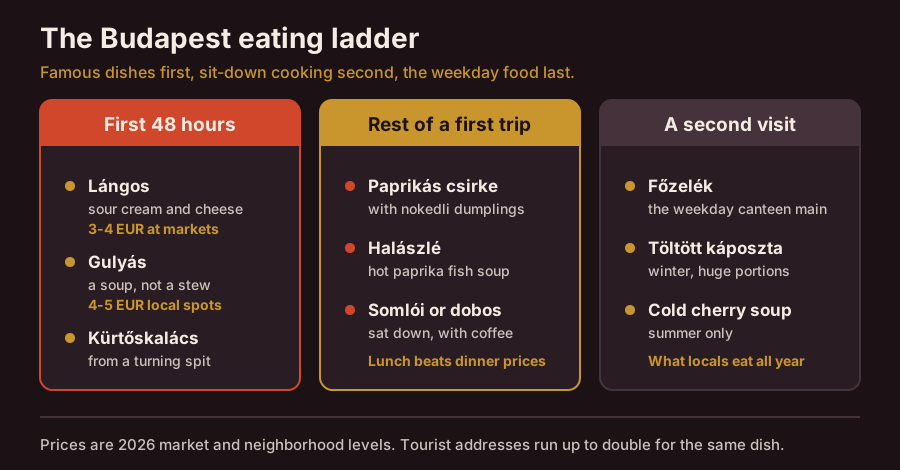
Eat lángos, gulyás and a spit-roasted chimney cake in the first two days, because they are the three flavors people come for. Save paprikás csirke, halászlé and a proper cake stop for the back half of the trip. Leave főzelék, stuffed cabbage and cold fruit soup for a return visit, when you want the everyday food instead of the famous food.
There is a natural order to this city's eating, and rushing it is how visitors end up with three heavy paprika meals in a row. The first rung is street level: fried, hot, cheap, eaten standing. The second rung is the sit-down canon, where the sauces get more interesting and the portions get serious. The third rung is what locals actually eat on a Wednesday, which almost never appears on a first trip because nobody sells it to tourists.
| Stage | What to eat | Why in this order |
|---|---|---|
| First 48 hours | Lángos with sour cream and cheese, a bowl of gulyás, kürtőskalács from a turning spit | The three flavors that define the city, all cheap, all findable on foot |
| Rest of a first trip | Paprikás csirke with nokedli, halászlé, somlói galuska or dobos torta | Sit-down cooking where technique shows, best at lunch prices |
| A second visit | Főzelék at a canteen, töltött káposzta in winter, cold sour cherry soup in summer | The weekday cuisine, rarely marketed to visitors, cheaper than all of the above |
| Whenever you are curious | New-scene cooking, from kosher street food at SHUK haCarmel to vegan lángos | The 2026 scene is widening fast, and it sits beside the classics rather than replacing them |
One caveat about the ladder: it is about sequence, not quality. Főzelék is not a lesser dish because it comes last, it is simply the one you will appreciate more after you understand how heavy the paprika canon can get. Eat the pea or squash version once and the whole cuisine makes more sense.
What Do You Order At Each Meal Of The Day?
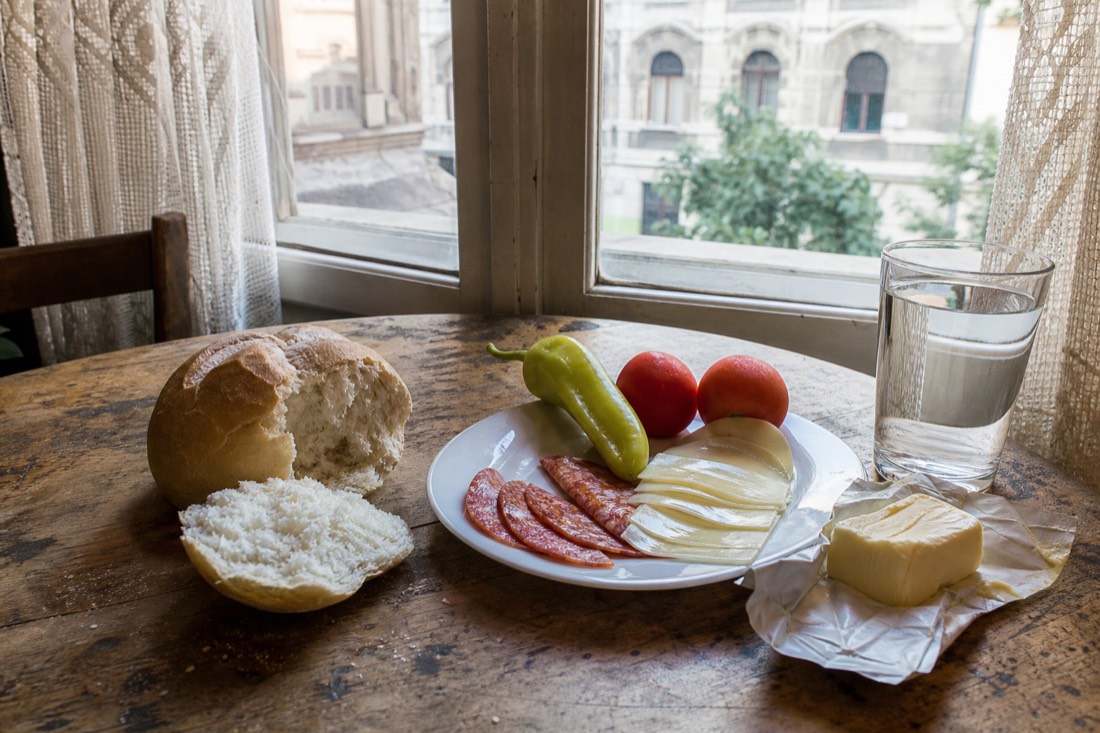
Breakfast is cold and simple: bread, butter, cold cuts, cheese, peppers and tomatoes. Lunch is the main event, opening with soup and running to a cooked main, and lunch menus are the cheapest way to eat a proper Hungarian plate. Afternoon means cake and coffee, or a chimney cake on the street. Dinner is lighter at home and full-canon in restaurants.
The single most useful thing to know is that the big cooked meal traditionally lands at midday, not in the evening. That is why lunch pricing is friendlier and why the canteens and étkezde counters do their real business between noon and two. Order the way the room orders: soup first, main second, and no apology for skipping dessert on a weekday.
| Meal | What a local table looks like | What to order as a visitor |
|---|---|---|
| Breakfast | Bread or rolls, butter, cold cuts, cheese, sliced peppers and tomatoes | Bakery pastry and coffee, or the market gallery for eggs with sausages |
| Lunch | Soup first, then a cooked main with bread and pickles | Gulyás then paprikás csirke, or főzelék at a canteen for a fraction of the price |
| Afternoon | Coffee and cake, or nothing at all | A grand café slice, or a chimney cake from a spit that is actually turning |
| Dinner | Lighter, often cold, sometimes just bread and what is in the fridge | The full restaurant canon, since kitchens serve the classics all evening |
| Late night | Whatever the ruin bar street is selling | Lángos or a sausage, the honest end of the night in District VII |
Two ordering habits mark you as someone who has done the reading. Ask for the hot paprika paste with your stew rather than expecting the kitchen to make it fiery, and take the pickles seriously; the sour side dish exists to cut the fat and the plate feels different without it. The ruin bar guide covers the late-night end of that sequence, District VII being where most of it happens.
Which Dishes Do Visitors Regret Skipping?
Főzelék, halászlé, the pickles beside the main course, and a proper cake sat down rather than eaten walking. Those four come up again and again in the "I wish I had tried" conversation at the end of a trip, because none of them are advertised to visitors and all of them are cheaper and more local than the dishes on every list.
I have guided international visitors here since 2022, more than a thousand people by my own count, and the regret list barely changes. Főzelék is first every time. It is a thick vegetable main, sold in plain canteens, roughly the price of a coffee in a tourist café, and nobody puts it on a poster because it does not photograph like a bowl of red stew. People who try it order it again the next day.
Halászlé is second, and I understand the hesitation. Fishermen's soup is aggressively red, carries real hot-paprika heat, and traditional versions come with bones. Ask for a fillet version if that worries you, but do not skip it out of caution; it is the most distinctive soup in the country and it tastes like nothing else in Central Europe.
Then the two small ones. Savanyúság, the sour pickled vegetables that come alongside rich mains, are not a garnish, they are the reason a Hungarian plate does not sit like a brick. And sitting down for a slice of dobos torta or somlói galuska with a coffee is a completely different experience from a pastry eaten on a bridge; the grand café notes explain why the room matters as much as the cake. What I would happily see a visitor skip: a second chimney cake, and any restaurant that translates the cuisine into small plates.
How Do You Eat Well On A Short Trip Without A Car Or Reservations?
Stay on foot and stay central. The classics cluster in walkable pockets: the market at Fővám tér, the canteens and taverns of Districts VII to IX, the cafés along the grand boulevards. Markets and street windows take no bookings at all, lunch is easier to walk into than dinner, and a service charge of about 12 to 15 percent lands on restaurant bills.
Budapest is unusually kind to a food trip with no plan. Nothing on the must-try list requires a car, a reservation or a day trip, and the two poles of the cuisine, market street food and tavern cooking, run on walk-ins by design. Book only when you are aiming at a specific well-known restaurant on a weekend evening, which is a different trip from this one.
Timing does more work than reserving. Arrive at a tavern at half past twelve rather than half past seven and you get the same kitchen, a shorter wait and often a cheaper menu. Markets close early, so anything market-based belongs in the morning half of your day. Sunday shrinks the options, which is the one calendar trap worth checking before you commit an afternoon.
Money is simple as long as you carry a little cash for stalls. Cards work almost everywhere that has a roof and a till, the szervizdíj is printed on the bill rather than added by you, and prices swing far more by address than by dish. The service charge and tipping guide covers the bill side properly, and if you want the walking already sequenced, the three-day eating itinerary strings these clusters into days.
How Do You Pick A Dish By Appetite And Time?
Twenty minutes and standing means lángos. Cold day and empty stomach means gulyás with bread. A proper sit-down without a food coma means paprikás csirke. Hot afternoon means cold sour cherry soup. Sweet and walking means a chimney cake from a turning spit. Cheap and vegetable-forward means főzelék.
The decision that trips people up is almost never which dish is best, it is which dish fits the next ninety minutes. Hungarian portions are large and paprika cooking sits heavy if you stack two rich plates back to back, so the honest planning question is what your afternoon looks like, not what the guidebook rates highest.
| Your situation | Order this | Why it fits |
|---|---|---|
| Twenty minutes, eating on your feet | Lángos, garlic, sour cream, cheese | Fastest hot food in the city and the cheapest at a market |
| Cold day, properly hungry | Gulyás with bread | A soup that eats like a meal, with a hot paprika paste on the side |
| Sit-down meal, more walking planned after | Paprikás csirke with nokedli | Rich but not a brick, especially at lunch portions |
| Hot summer afternoon | Cold sour cherry soup | The cuisine's answer to heat, and a genuine surprise to most visitors |
| Sweet tooth, still walking | Kürtőskalács from a turning spit | Caramelized to order, and terrible when it has been reheated |
| Tight budget, want vegetables | Főzelék at a canteen | The local weekday lunch, cheap and vegetable-based by construction |
| Winter, sharing with a group | Töltött káposzta | Portions are huge, so one order plus soup can feed two |
| You want the classics without the research | A guided tasting walk | Venues pre-picked, several dishes in one afternoon, no address hunting |
One last piece of arithmetic. Two full meals a day is plenty here, because market grazing between them adds up faster than you expect. Plan the big plate for lunch, keep the evening loose, and you will finish the trip having tasted more of the list than the person who booked three dinners.
What is the number one food to try in Budapest?
Goulash, for the history, but lángos is the one visitors talk about afterwards. If you only have one meal, a market lángos plus a shared bowl of goulash covers the two poles of Hungarian eating for under 10 EUR.Is food in Budapest expensive?
By Western European standards, no. Market lángos runs 3-4 EUR and neighborhood goulash 4-5 EUR in 2026. Tourist zones charge up to double, so the address matters more than the dish.Can vegetarians eat well in Budapest?
Yes, and better every year. Főzelék is a vegetable-based local staple, cheese lángos is meat-free by default, and dedicated vegan venues now fry vegan lángos and grill plant-based burgers across the city.What dessert is Budapest known for?
Chimney cake on the street, and dobos torta or somlói galuska in cafés. The chimney cake should be roasted to order over the spit; a caramelized, crackly outside is the sign you found a good stand.Choose Your Budapest Experience
Carpe Diem District VII Food Walk. Four Hungarian eateries, three drinks and an English-speaking guide through District VII. Have a date in mind? Check it before arranging the rest of your Budapest day.
150 minutes. 150 minutes; meet outside the Orthodox Synagogue on Kazinczy utca. Vegetarian and alcohol-free options; no vegan or gluten-free diets.
Choose a date to see scheduled departures. Final availability and price are confirmed on Viator.
No verified experience fits those requirements. Adjust your choices, or keep the independent plan described above.
Compare Options And Fit Your Plans
General recommendations until you choose. Sightseeing cruises use recorded commentary; the dinner cruise has no guide. All selected activities meet in central Pest; use the operator confirmation for the exact point and option.
- Goulash Cooking At Chefparade: 180 minutes. Make goulash soup, a paprika main and apple strudel in a hands-on three-course cooking class. Age 6+. Studio address is confirmed as Páva utca 13 or Bécsi út 27. Vegetarian menu on request; confirm the menu and dietary requirements before booking.
- Foodapest Market To Tavern: 180 minutes. Traditional dishes, street-food tasters and wines with an English-speaking local guide. Daytime option visits the market; the 17:00 option skips it. Notify the operator about vegetarian or vegan substitutions. Not suitable for coeliac requirements.
- Withlocals Private Food Tastings: 180 minutes. Explore Budapest with your own foodie host, with six or ten tastings and vegetarian alternatives on request. Allow 180 minutes for ten tastings; the six-tasting option is 120 minutes. Meet outside the Great Market Hall. No hotel pickup. Tell the host your dietary needs; vegan and coeliac suitability are not established.
- Budapest Culinary And Wine Walk: 300 minutes. Explore food markets and neighbourhoods with an English-speaking food specialist, tasting Hungarian dishes and wines along the way. Allow five hours and substantial walking. Current option is private; private transport and gratuities are excluded. Dietary arrangements require confirmation.