3-Day Budapest Food Itinerary 2026: 72 Hours of Eating, by a Local
Three days, nine meals, one market hall, and a river. Here is how I would feed a first-time visitor without wasting a single lunch.
 Written with Gábor Kovács, Budapest local specialist and experience guide
Short answer
Three days is the sweet spot for eating in Budapest. Day one: the Great Market Hall, then a guided tasting walk through Pest. Day two: street food by day, a Hungarian wine tasting by night. Day three: a morning cooking class and a candlelit dinner cruise on the Danube. Book the evening events before you fly; walk everywhere between meals.
My grandmother had a phrase for tourists who tried to see Budapest in a day: they leave hungrier than they came. She meant it literally. This city feeds you slowly, in courses, and the courses are spread across two riverbanks. I have lived here my whole life, I have walked visitors through it since 2022, and the plan below is the one I actually give friends. It assumes you land with an appetite and three clear days.
Keep the three-day rhythm: learn the flavours, explore at your own pace, then choose a memorable final evening. A first-day food walk can help you decide what to order later.
Booking choice: Foodapest combines traditional dishes, street-food tasters and wines in a three-hour guided walk. Explore Foodapest Market To Tavern
What Does A 3-day Eating Plan For Budapest Look Like?
Structure each day around one anchor meal and let the rest orbit it. Day one anchors on a guided tasting walk after a market morning. Day two anchors on an evening wine tasting after a street food afternoon. Day three anchors on a dinner cruise after a morning cooking class. Nothing overlaps, and nobody eats two heavy meals in a row.
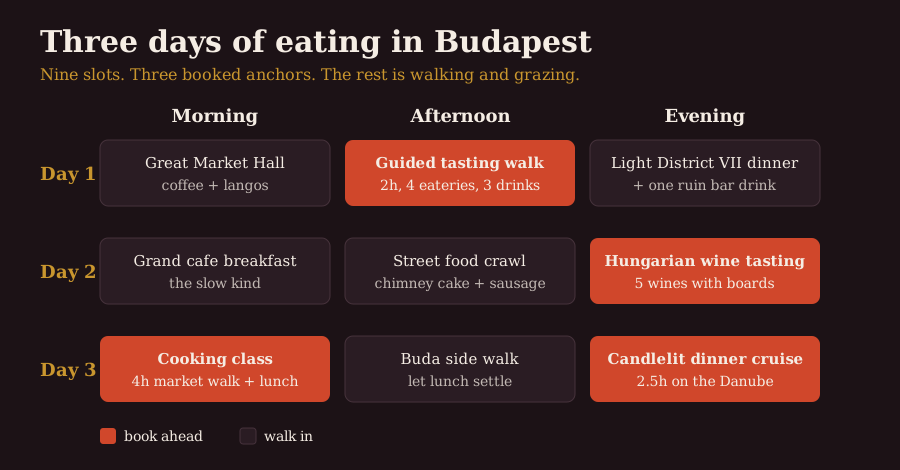
Here is the whole plan on one screen. Every anchor is bookable; everything else is walk-in.
| Morning | Afternoon | Evening | |
|---|---|---|---|
| Day 1 | Great Market Hall: browse, coffee, a lángos (deep-fried dough with sour cream and cheese) | Guided 150-minute tasting walk through Pest, 4 eateries and 3 drinks | Light dinner in District VII, one ruin bar drink |
| Day 2 | Grand café breakfast, the slow kind | Street food crawl: kürtőskalács (chimney cake), sausages, more lángos if you dare | Hungarian wine tasting, 5 wines with boards |
| Day 3 | 4h market walk and cooking class, you cook your own lunch | Buda side walk, let lunch settle | Candlelit dinner cruise on the Danube |
The logic is simple. Mornings are for markets and cafés because that is when locals use them. Afternoons stay flexible. Evenings carry the reservations.
What Should You Eat On Day One?
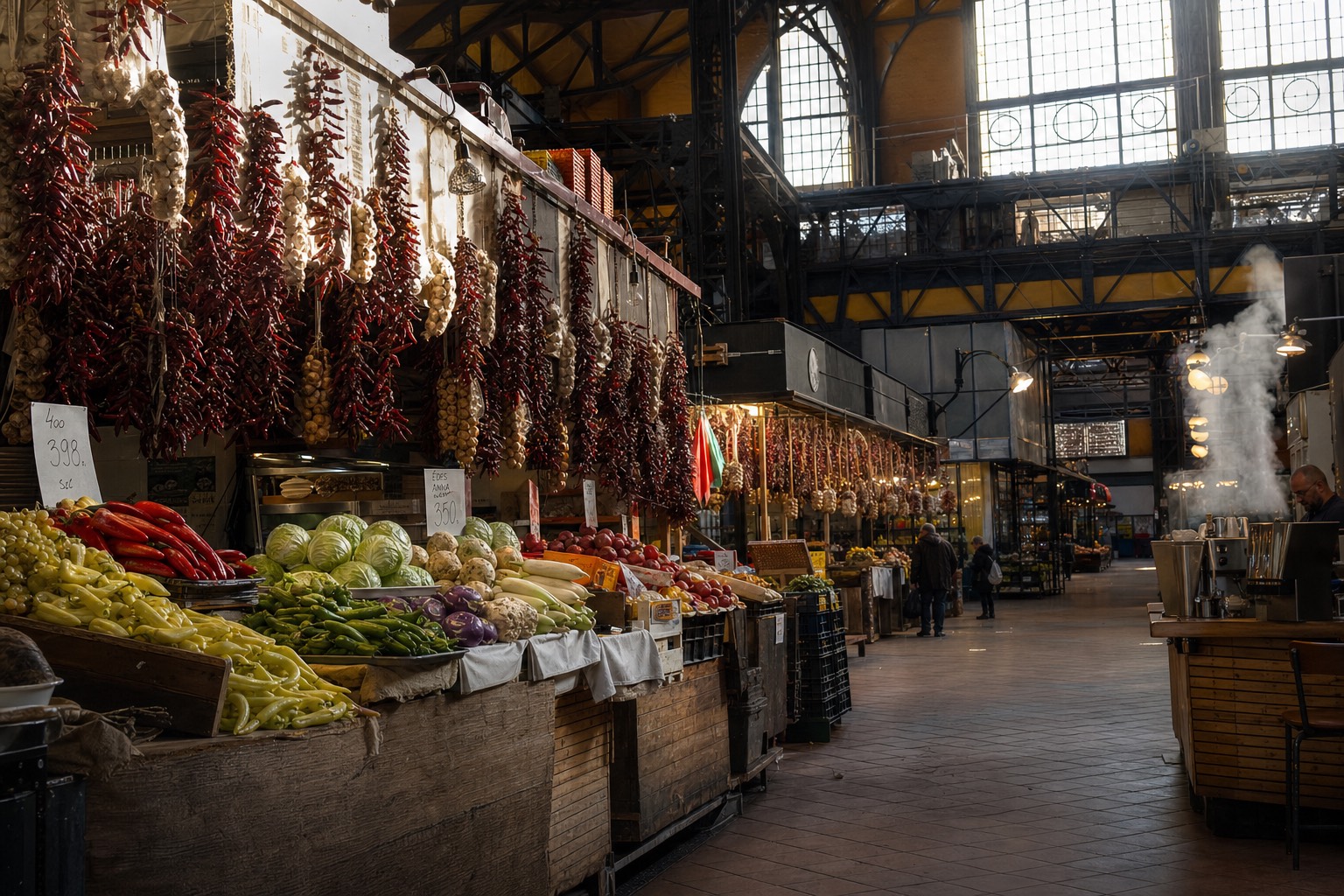
Start at the Great Market Hall when it opens, eat a lángos upstairs, buy paprika downstairs, then join an afternoon tasting walk so a guide can decode the rest. Day one is orientation day: you learn what goulash, túrós csusza and Tokaji actually are before you order them alone.
The market hall is where I still shop, and I have written a full walkthrough of it in my Great Market Hall guide. Go before 10 a.m. The ground floor is produce, sausage and paprika; the upper gallery is where the food stands are. One lángos is breakfast enough.
Then leave lunch light. A tasting walk is a meal spread across several stops: Carpe Diem’s current route lasts 150 minutes and includes four eateries and three drinks. Keep the later evening flexible around your appetite.
Which Guided Tasting Walk Should Anchor Day One?
Carpe Diem’s current food walk lasts 150 minutes and visits four Hungarian eateries with three drinks included. Foodapest’s three-hour route is another option, with a daytime market visit or an evening food-only route.
Compare the actual departure times with the market morning and the evening meal. The fuller decision tool at the end of this article helps you choose between the food walk, cooking class, wine tasting and dinner cruise.
What Should Day Two Cover?
Day two belongs to the street and the glass. Spend the afternoon grazing through Budapest's street food, then sit down in the evening for a proper Hungarian wine tasting: five wines with cheese and charcuterie boards runs about ninety minutes and rewrites what most visitors think Hungarian wine is.
Start slow. A grand café breakfast is a Budapest ritual, and it eats up a morning in the best way. If your legs need a reset before the grazing, this is also the slot Budapest built its thermal baths for: a soak at Széchenyi is a separate booking from any food tour, and you can check ticket availability here, with over 2,200 reviews on the Viator listing. Then graze: my street food guide maps the stands, but the short version is one warm kürtőskalács, one sausage from a proper büfé, and whatever the queue of locals is pointing at.
The evening is the anchor. Hungary grows serious wine in more than twenty districts and most visitors can name none of them, which is why a guided tasting earns its slot. I break down the grapes and regions in my Hungarian wine guide, and the bookable options live on the wine tastings page. The five-wine tasting includes cheese and charcuterie boards and lasts 90 minutes. The Viator and GetYourGuide listings describe the same Taste Hungary experience; compare the actual date and terms rather than treating them as two different tastings.
How Should The Last Day End?
Cook in the morning, cruise in the evening. A four-hour market walk plus cooking class gets you inside the cuisine, and the candlelit dinner cruise gets you the UNESCO-listed riverbank at night. It is the single most photogenic dinner in the city and the right full stop for the trip.
The four-hour local-home cooking class includes a main course and dessert, with a market visit in the morning option. The actual menu is confirmed by the operator; do not assume it guarantees goulash and strudel. The meal forms part of the class, so leave the afternoon food plan light.
Then the river. Parliament, the Castle, the bridges, all lit, all sliding past your table over two and a half hours with live music. I wrote a full reported piece on what the dinner cruise evening is actually like, and the wider options are on the dinner cruises page. In high summer the sun sets after 8 p.m. here, so the evening sailings catch the last light.
Is 3 Days In Budapest Too Long?
No. For sightseeing alone you could compress Budapest into two days, but for eating, three days is about right, not too long. The city holds more than five thousand restaurants, two distinct riverbanks, a wine culture and a café culture. Three days lets you taste all four without eating in a hurry.
I get this question a lot, usually from people routing between Vienna and the Balkans. My honest answer: two days feels like a highlight reel, four days is a residency, three days is the trip. TripAdvisor currently lists over 5,100 restaurants in the city, and the Michelin Guide recommends 36 of them, per the 2025 Hungary selection. You will not run out of material.
What three days will not cover: the Tokaj wine country, the Balaton, or a proper Sunday family lunch, which takes four hours and a grandmother. Those are reasons to come back, not reasons to stay longer this time.
What Do You Need To Book Ahead?
Book the three evening anchors and any fine dining before you land. Hungarian dinner runs 7 to 9 p.m., and fine dining rooms typically seat once per evening, so an 8 p.m. table is the table. Walk-ins cover everything else on this plan, including the market and street food.
The reservation culture here is stricter than the prices suggest. As Offbeat Budapest notes, the main meal is dinner between 7 and 9 p.m., and the top rooms offer one seating, so book for 8 p.m. and hold the slot. The room itself matters too: this whole plan assumes you sleep inside the eating circle, and my where to stay guide matches districts to itineraries.
| What | When to book | Why |
|---|---|---|
| Candlelit dinner cruise | As soon as dates are fixed | Evening sailings are the ones people plan trips around |
| Tasting walk (day 1) | A few days out | Guided walks run on set departures, not walk-ins |
| Wine tasting (day 2) | A few days out | Fixed start times, seated format |
| Cooking class (day 3) | A week out if you can | A 4-hour morning block, so slots are finite |
| Fine dining table | Before you fly | One seating per evening; 8 p.m. is the norm |
| Market hall, street food, cafés | Never | Walk in, follow the locals |
How Much Will Three Days Of Eating Cost?
Budget realistically rather than fearfully. An inexpensive restaurant meal runs about 4,495 forints, a mid-range three-course dinner for two about 21,500 forints without drinks, and during Restaurant Week seasons roughly 200 top restaurants sell three-course menus from 6,900 forints with service included.
Those figures come from current Numbeo data for Budapest, and they match what I see on menus. The bookable anchors are separate: I do not print tour prices here because they move, and the live price is always on the listing.
| Meal type | Current cost |
|---|---|
| Inexpensive restaurant meal | 4,495 Ft |
| Three-course mid-range dinner for two, no drinks | 21,500 Ft |
| Restaurant Week three-course menu (seasonal, service included) | from 6,900 Ft |
One warning that saves arguments: most sit-down places add a service charge to the bill. My tipping and service charge guide covers how to read it.
How Do You Adapt This Plan For Two Days Or Five?
Cut from the middle, never from the ends. On two days you keep the tasting walk and the cruise and lose the street food afternoon. On five days you do not add anchors, you add space: a Buda day, one long Sunday lunch, and an afternoon with nothing booked. The three-day spine survives both edits.
The two-day version fails for one reason, and I watch it fail every season. People keep all three anchors, compress them, and end up eating a heavy lunch two hours before a heavy dinner. Two days means two anchors. Put the tasting walk on the first afternoon so you learn the vocabulary of the menus early, and put the cruise on the second night so the trip closes on the river rather than in an airport queue. The market becomes a breakfast stop instead of a morning, which is a real loss, but a smaller one than eating twice at once.
Five days brings the opposite problem: fullness. Nine restaurant meals is a good trip. Fifteen is a chore, and by the fourth day most visitors are quietly craving a salad and a kitchen. So the extra days go to breadth, not volume. Buy from the market and eat one breakfast out of a fridge. Give a whole afternoon to a single long lunch, the Sunday kind that takes four hours and a grandmother. Take a day out of the city entirely, toward Tokaj or the Balaton, and come back hungry.
| Trip length | Anchors to keep | What changes | The failure to watch |
|---|---|---|---|
| Two days | Tasting walk, dinner cruise | Market drops to a breakfast stop; no street food afternoon | Two heavy meals stacked in one day |
| Three days | All three, as written | Nothing | This is the version the plan was built for |
| Four days | All three plus one open day | Add a Buda afternoon and one unbooked dinner | Booking the extra day out of habit |
| Five days | All three, spread wider | Add a market shop with a kitchen, one long lunch, one day out of the city | Eating out three times a day for five days |
Whatever length you land on, read what to eat in Budapest before you arrive rather than on the plane. Knowing the difference between gulyás and pörkölt changes what you order on day one, and day one sets the rest.
In What Order Should You Make The Bookings?
Book by the blocks of time you need. Decide the dinner-cruise evening and four-hour cooking morning first, then fit shorter tastings and independent restaurant visits around them.
Most clashes on this itinerary are not double bookings. They are meals that quietly cancel each other out. The cooking class doubles as lunch, so a lunch reservation on day three is a wasted meal. The cruise is dinner, so a table that night is a second dinner. The tasting walk leaves you full at six in the evening, which is why day one ends on soup and a drink rather than a tasting menu.
That is also why the restaurant table goes last. Hungarian dinner runs between 7 and 9 p.m., and fine dining rooms typically seat once an evening, so the 8 p.m. slot is the only slot. Fit it around what is already locked instead of the other way around.
| Order | Lock this | Time it eats | Clash it prevents |
|---|---|---|---|
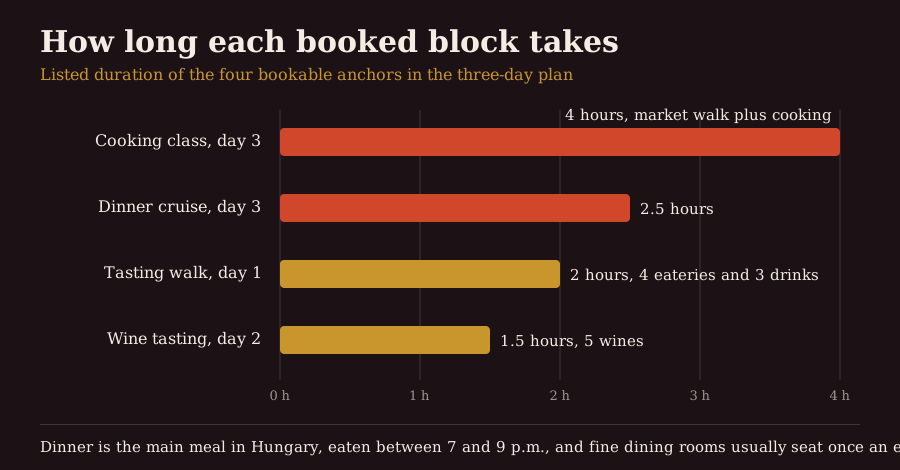
| 1 | Dinner cruise, day 3 evening | An evening, roughly two and a half hours plus boarding | Stops a restaurant table landing the same night |
| 2 | Cooking class, day 3 morning | A four-hour morning block that doubles as lunch | Stops you planning a separate day-three lunch |
| 3 | Tasting walk, day 1 | 150 minutes for Carpe Diem or three hours for Foodapest | Choose the actual departure before arranging the market and later meal |
| 4 | Wine tasting, day 2 evening | About ninety minutes, seated, fixed start | Stops it colliding with a 7 p.m. table |
| 5 | Fine dining table | One seating, 8 p.m. | Prevents a two-dinner evening |
What Happens If It Rains, Or A Booking Falls Through?
Nearly all of this plan is indoors. The market hall, the grand cafés, the wine cellar and the cooking class are roofed, and only the street food afternoon is genuinely exposed. If a booking falls through, move that same experience to another slot before you swap it for a different one.
The weather question sorts itself once you look at the plan as buildings rather than activities. Day one is a covered market and a walk between doorways. Day two is a café, a street, and a seated cellar; only the street part is at risk. Day three is a kitchen and a boat, and any weather policy on the sailing is on the listing, so read it there instead of guessing from a forecast app.
If a class is unavailable, keep the independent market visit and decide whether another cooking date still fits. If you switch formats, allow for the different duration and food included. The Hungarian wine tasting and wine-and-charcuterie pairing session featured on this site represent the same Taste Hungary experience, not two independent fallback products.
For a replacement dinner, the city gives you room to fail: over 5,100 restaurants are listed here, and Restaurant Week seasons put roughly 200 of the good ones on three-course menus from 6,900 forints with service included. That is a soft landing by any capital's standards. If you want the wider picture on what things cost before you improvise, my food prices guide has the current numbers.
How Much Walking Does This Itinerary Involve?
Plan three walking days, not three eating days. Every anchor sits in central Pest, so allow a comfortable stroll between blocks rather than transit, and budget one seated hour in the middle of each afternoon. What tires people here is standing on stone floors and cobbles, not distance, and the market morning is where it starts.
The market hall is two floors of standing. Then the tasting walk is, structurally, a walk: four eateries and three drinks means four stretches of pavement between them. Put a museum morning in front of that and you will spend the last stop looking at a chair rather than a plate. Day one is the day to underschedule.
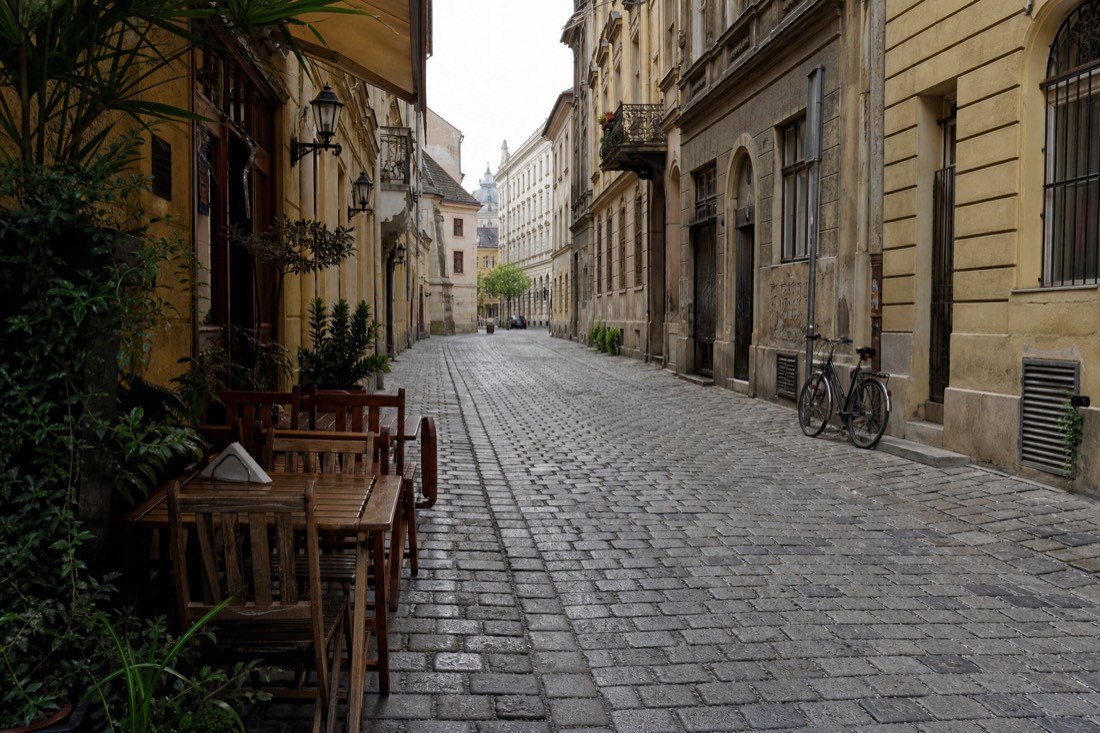
Day three is the one with a hill in it. The Buda side rises behind the river, so an afternoon walk over there costs more legs than the same walk in Pest, which is exactly why it lands after a cooking class you sat down for and before a dinner you sit down for. Pace it that way and the climb reads as digestion rather than exercise.
Two practical allowances. Give yourself a full seated hour somewhere in each afternoon, coffee or a bath or a park bench, because the plan assumes recovery time that nothing on the calendar shows. And allow more time for the walk home after dinner than the walk out to it, since nobody who has just eaten goulash walks at their morning pace. My morning at the market hall piece covers what the early version of that first walk actually feels like.
What Changes If You Travel With Kids Or In A Group?
With small children, days one and two carry the trip and day three becomes optional: check each listing's age rules first, since the cruise is a late, long dinner by small-child standards. With six or more people, book the seated formats earliest, because capacity and fixed start times bite groups before they bite couples.
Kids eat well here, better than in most European capitals, because the best cheap food is also the most fun to hold. Chimney cake is a pastry on a stick. Lángos is a plate-sized piece of fried dough you tear apart with your hands. The market hall's upper gallery is loud and busy in a way that entertains a seven-year-old for an hour. None of that needs a booking, which is the point: with children, the unbooked parts of this plan are the strong parts.
Groups fail differently. The seated experiences have fixed capacities and fixed departures, so a party of eight either books early or splits across two slots, and splitting is not the disaster people fear. Two groups of four on consecutive departures see the same thing and argue about it afterwards over a drink. What genuinely does not work is booking a group dinner table at 8 p.m. on the same night as any anchor, for the reasons in the ordering table above.
| Who you are travelling with | Change to make | Why |
|---|---|---|
| Children under about ten | Keep the market and street food; move or drop the cruise | It is a late, long dinner for small children |
| Teenagers | Keep everything; swap one café breakfast for the market | Chimney cake and lángos do the persuading |
| Six or more people | Book the seated formats first and furthest ahead | Fixed capacity and fixed start times |
| A group with mixed appetites | Keep the anchors, leave the dinners unbooked | Walk-ins let people peel off early |
| Anyone avoiding gluten or meat | Flag it at booking, never on the day | Set menus are shopped in advance |
That last row matters more than it looks. Tasting menus are bought and prepped before you arrive, so a note in the booking form is worth more than a conversation at the table; my gluten-free guide covers which dishes are quietly off-limits either way.
Can I do this itinerary without any bookings at all?
Mostly, yes. The market, street food and cafés never need reservations. You would lose the three evening anchors, though, and those are the meals people remember. At minimum, reserve the dinner cruise and one proper dinner table.
Which day should I swap if it rains?
Day two. Street food is the only weather-dependent block in the plan. Swap the crawl for a long grand café afternoon and push the wine tasting earlier; the market hall and the cruise are covered regardless.
Is this plan doable with kids?
Days one and two, easily; the market and street food are the most kid-friendly eating in the city. For day three, check each listing's age policy before booking, and note the cruise is a late, long dinner by small-child standards.
Choose Your Budapest Experience
Foodapest Market To Tavern. Traditional dishes, street-food tasters and wines with an English-speaking local guide. Have a date in mind? Check it before arranging the rest of your Budapest day.
180 minutes. Daytime option visits the market; the 17:00 option skips it. Notify the operator about vegetarian or vegan substitutions. Not suitable for coeliac requirements.
Choose a date to see scheduled departures. Final availability and price are confirmed on Viator.
No verified experience fits those requirements. Adjust your choices, or keep the independent plan described above.
Compare Options And Fit Your Plans
General recommendations until you choose. Sightseeing cruises use recorded commentary; the dinner cruise has no guide. All selected activities meet in central Pest; use the operator confirmation for the exact point and option.
- Hungarian Wine And Cheese Tasting: 90 minutes. Explore five Hungarian wines with a sommelier, artisan cheeses and charcuterie at a communal table. Ages 18 and over. Vegetarian alternatives require advance notice. The cellar is not wheelchair accessible; extra food and drinks cost separately.
- Legenda Candlelit Dinner Cruise: 150 minutes. Spend an evening on the Danube with a four-course adult dinner, a welcome drink and live music. Meet at Dock 7 near the Marriott Hotel. Extra drinks cost separately. No guide is included, and the operator cannot provide a vegan menu.
- Withlocals Private Food Tastings: 180 minutes. Explore Budapest with your own foodie host, with six or ten tastings and vegetarian alternatives on request. Allow 180 minutes for ten tastings; the six-tasting option is 120 minutes. Meet outside the Great Market Hall. No hotel pickup. Tell the host your dietary needs; vegan and coeliac suitability are not established.
- Hungarian Cooking In A Local Home: 240 minutes. Prepare a Hungarian main course and dessert with a local chef; ingredients, equipment and a recipe booklet are included. Select the morning market option for the market visit; the evening option starts at the apartment. The operator cannot accommodate coeliac disease.