Is Budapest Celiac Friendly? A Local's Gluten-Free Guide
Hungarian cooking loves its flour, yet this city hides more dedicated gluten-free kitchens than almost anyone expects.
 Written with Gábor Kovács, Budapest local specialist and experience guide
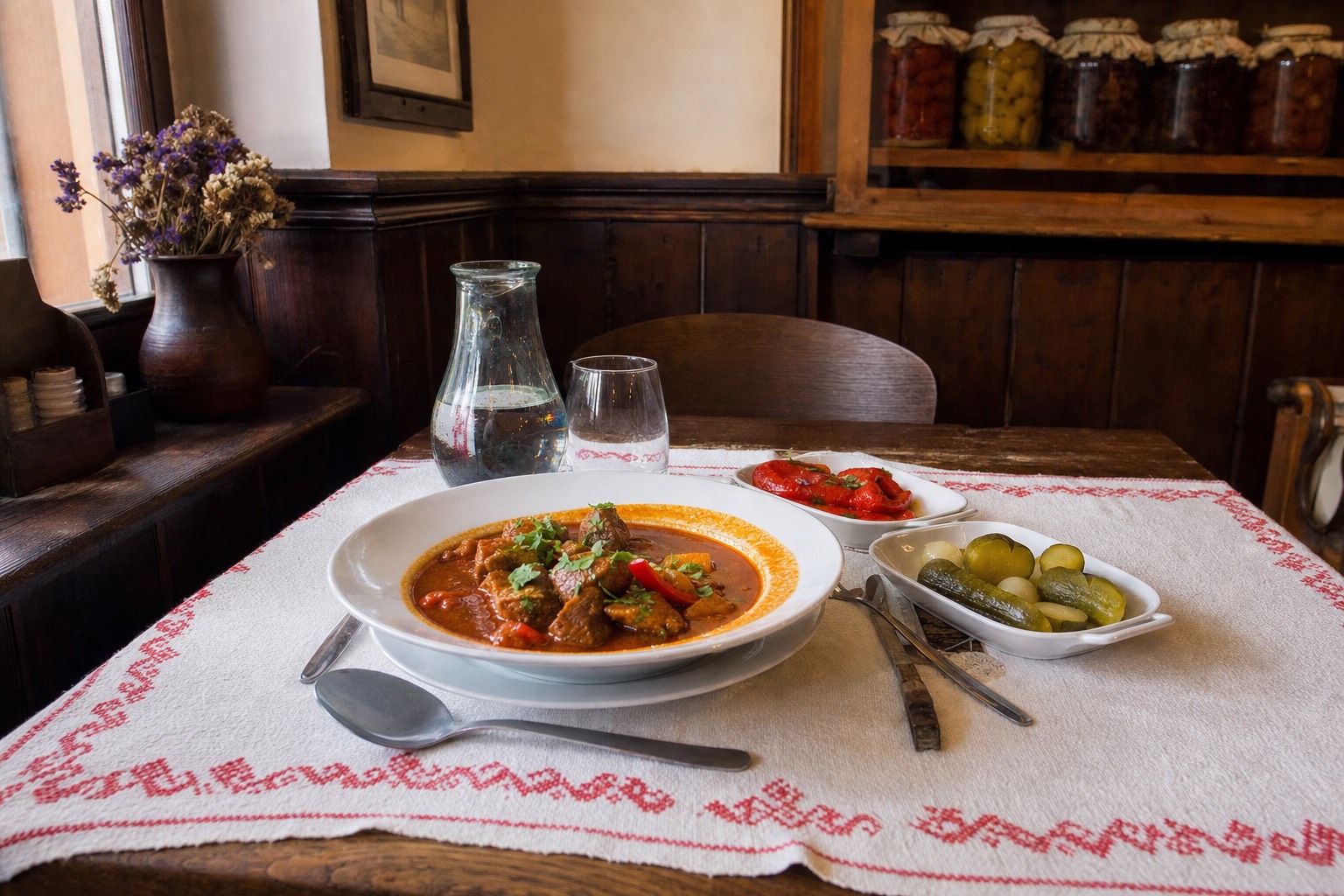
Short answer
Yes, with planning. Budapest counts six dedicated gluten-free bakeries and nine fully gluten-free restaurants as of 2026, including a 100% gluten-free traditional Hungarian house. The catch is the classic cuisine itself, which leans on wheat flour in roux, dumplings and breading, so celiacs should target dedicated venues and flag their diet when booking any tour.
I grew up thinking flour was a food group. My grandmother thickened her főzelék (a thick Hungarian vegetable stew) with a wheat roux, pinched csipetke pasta into the gulyás, and rolled everything else in breadcrumbs. So when a coeliac guest first asked me whether she could eat anything at all in Budapest, I expected the answer to be grim. Then I actually went looking, and the city surprised me.
For coeliac requirements, use the dedicated-kitchen guidance below. The food-walk option here is only for travellers who can accept gluten-free substitutions without a guaranteed cross-contact-free environment.
Booking choice: Foodapest offers gluten-free substitutions with advance notice, but explicitly cannot guarantee a coeliac-safe environment. Explore Foodapest Evening Food Walk
Is Budapest Celiac Friendly?
More than its cuisine suggests. As of 2026 Budapest has six dedicated gluten-free bakeries and nine fully gluten-free restaurants, plus a national coeliac society vetting venues since 1990. Traditional Hungarian cooking is genuinely wheat-heavy, so the strategy is dedicated kitchens for safety and informed ordering everywhere else.
The quoted venue counts come from Endless Distances’ Budapest guide and can change. A dedicated gluten-free kitchen can simplify planning, but confirm the venue’s current preparation practices and your own requirements before eating.
The honest half of the answer: outside those venues, this is a cuisine built on wheat. Bread lands on every table, stews get flour roux, and the fried things you smell everywhere are breaded. A mainstream Budapest restaurant can often feed you safely, but only after a conversation, and cross-contamination in a busy old-school kitchen is a real risk. Plan around the dedicated places for your must-eat Hungarian classics, and treat everywhere else as a case-by-case call.
| Comfort level | What it looks like in Budapest | Risk |
|---|---|---|
| Dedicated 100% GF venue | Entire kitchen gluten-free, order freely | Minimal |
| Coeliac-society-listed venue | Staff trained, GF options flagged | Low, still confirm |
| Mainstream restaurant | Some naturally GF dishes, shared kitchen | Moderate, ask about roux and breading |
| Street-food stand | Lángos and chimney cake are wheat | High, mostly skip |
Which Hungarian Classics Are Naturally Gluten-free?
More than you would guess. Gulyás broth itself is potato-and-paprika based, paprikás sauces need no flour when made properly, lecsó is just peppers, tomato and onion, stuffed cabbage uses rice, and grilled meats and roast duck are safe. The danger is the garnish: dumplings, csipetke and bread arrive uninvited.
Hungarian flavor lives in paprika, onions, sour cream and slow cooking, none of which involve gluten. A proper chicken paprikás gets its body from sour cream and reduction. Töltött káposzta, our stuffed cabbage, binds pork with rice, not breadcrumbs. Lecsó, the pepper-tomato stew we eat all summer, is naturally safe until someone stirs in sausage of unknown pedigree.
The traps sit next to the safe things. Gulyás is frequently finished with csipetke, tiny pinched wheat pasta. Paprikás is traditionally served over nokedli, soft flour dumplings, so you swap them for potatoes or rice. And the whole rántott family, the beloved fried-in-breadcrumbs dishes, is off the table outside dedicated kitchens. My deeper dish-by-dish rundown lives in the Hungarian food guide, and the what to eat in Budapest list marks the classics worth seeking out.
| Dish | What it is | Gluten status |
|---|---|---|
| Gulyás (goulash soup) | Paprika beef-and-potato soup | GF base, refuse the csipetke pasta |
| Csirkepaprikás | Chicken in paprika-sour-cream sauce | GF sauce, swap nokedli dumplings for rice |
| Lecsó | Pepper, tomato and onion stew | Naturally GF, check any added sausage |
| Töltött káposzta | Cabbage stuffed with pork and rice | Naturally GF in traditional form |
| Grilled duck, pork, mangalica | Roast and grilled meats | GF, confirm no flour gravy |
| Lángos | Deep-fried dough round | Wheat, avoid outside GF bakeries |
| Kürtőskalács (chimney cake) | Spit-roasted sweet dough | Wheat, avoid |
| Rántott sajt, rántott hús | Breaded fried cheese or meat | Breadcrumbs, avoid |
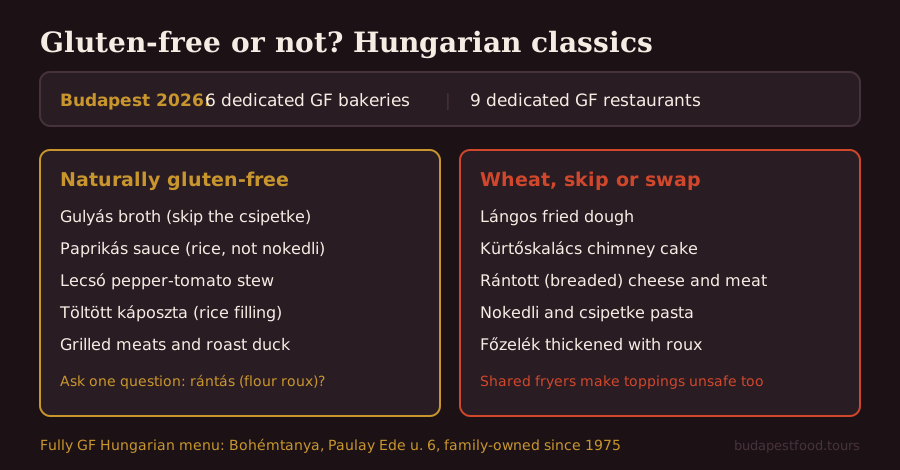
Where Are Budapest's Dedicated Gluten-free Restaurants?
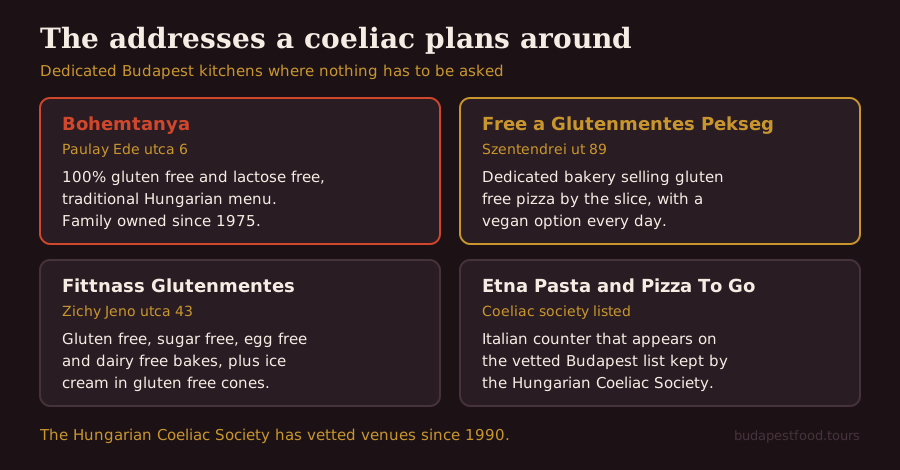
Bohémtanya Gluténmentes Vendéglő at Paulay Ede utca 6 specialises in gluten-free Hungarian cooking. Confirm current opening hours, menu and preparation arrangements with the restaurant rather than treating a directory entry as a safety guarantee.
This place is the answer to the question every coeliac visitor actually asks, which is not "can I eat safely" but "can I eat the real thing safely". At Bohémtanya the whole menu of Hungarian standards is gluten-free by default, breaded dishes included; their English menu lists fried chicken breast with fries at 5,990 forints, which is an ordinary mid-range Budapest price rather than an allergy surcharge. For context on what dishes cost across the city, my Budapest food prices guide has the full picture.
Beyond the flagship, the dedicated scene spreads across both sides of the river:
| Venue | Type | Why it matters |
|---|---|---|
| Bohémtanya Gluténmentes Vendéglő, Paulay Ede u. 6 | 100% GF and lactose-free restaurant | Traditional Hungarian menu, family-owned since 1975 |
| Free a Glutenmentes Pekseg, Szentendrei út 89 | Dedicated GF bakery | GF pizza by the slice, a vegan option daily |
| Fittnass Glutenmentes, Zichy Jenő u. 43 | Dedicated GF pastry and ice cream | Also sugar-free, egg-free and dairy-free lines, GF cones |
| Etna Pasta & Pizza To Go | Coeliac-society-listed Italian | On the Hungarian Coeliac Society's vetted Budapest list |
The vetting layer under all this is the Hungarian Coeliac Society, lisztérzékeny meaning gluten-sensitive in Hungarian, which has been at it since 1990 and maintains its own list of celiac-friendly Budapest restaurants. When a venue appears on their list, that is a stronger signal than any tourist review.
How Do You Order Gluten-free In Hungarian?
Two words carry you: gluténmentes, meaning gluten-free, and lisztérzékeny, literally flour-sensitive, the everyday Hungarian word for coeliac. Say "lisztérzékeny vagyok", I am coeliac, and any waiter under forty will understand immediately. Budapest kitchens deal with the request weekly, not yearly.
Pronunciation, roughly: GLOO-tayn-men-tesh and LEEST-air-zay-keny. Nobody expects perfection, and pointing at the written word works fine, so keep this phrase set on your phone:
| Hungarian | Say it like | Means |
|---|---|---|
| Gluténmentes | gloo-tayn-MEN-tesh | Gluten-free |
| Lisztérzékeny vagyok | leest-AIR-zay-keny VOD-yok | I am coeliac |
| Liszt nélkül | leest NAY-kool | Without flour |
| Rántás van benne? | RAHN-tahsh von BEN-neh | Is there flour roux in it? |
That last question is the sleeper. Roux hides in dishes that look innocent, the creamy vegetable főzelék above all. Waitstaff answer it honestly in my experience; the failure mode is not deception but a kitchen that simply never thought about the flour in its thickener. Which is exactly why the dedicated venues exist.
Menus increasingly carry allergen numbering under EU rules, gluten as allergen 1, so scan for that footnote too.
Can You Join A Food Tour If You're Coeliac?
Do not assume a standard food tour can accommodate coeliac disease. None of the food experiences in this verified shortlist establishes the required cross-contact arrangements; Carpe Diem excludes gluten-free diets and the Foodapest cooking class excludes coeliac requirements.
Set expectations honestly: on a standard tasting route some signature bites are wheat by definition, chimney cake being the obvious one, so a swap might mean extra cheese, cured meats or a naturally safe stew rather than a gluten-free replica of the dough. If a fully safe kitchen matters more than the walking format, build your own crawl around Bohémtanya and the dedicated bakeries instead. Both are good holidays. If you also avoid dairy or meat, my vegetarian Budapest guide covers the overlap.
What Should A Coeliac Skip Entirely In Budapest?
Street-food dough is the main casualty: lángos, kürtőskalács and the pastry counters are wheat through and through, and shared fryers make "just the toppings" a false hope. Skip anything rántott (breaded), be wary of soups in tourist-strip kitchens, and get your fried fix at the dedicated GF venues instead.
The fryer problem deserves emphasis. Even where a stand offers something theoretically gluten-free, it usually meets oil that has been frying battered things all day. The same logic applies to the rántott family in ordinary restaurants, where breaded and unbreaded food share equipment.
None of this is deprivation with a plan in hand. Free a Glutenmentes Pekseg does its pizza slices, Fittnass does ice cream in a GF cone, Bohémtanya does the full breaded-and-fried Hungarian spread safely. The wheat-heavy classics you are skipping on the street have gluten-free mirrors across town; you just eat them at an address instead of a window. And on the tourist strips, where kitchens are least likely to take your allergen seriously, the dos and don'ts guide gives you extra reasons to walk one street over anyway.
Which Other Hungarian Dishes Need A Question Before You Order?
Beyond the obvious breaded and doughy things, a second tier of classics sits on the line: pörkölt and halászlé are flour-free by tradition but not by every kitchen, hortobágyi palacsinta is a wheat pancake, nokedli and csipetke are flour, and the dessert canon splits sharply between pastry and cream.
The first table in this guide sorts the headline dishes. This one takes the next layer down, the food you meet once you stop ordering off the tourist page, because that is where the questions get interesting.
| Dish | What it is | Where flour can appear |
|---|---|---|
| Pörkölt | Slow-cooked paprika meat stew | Traditionally thickened by reduction, ask whether a roux was used |
| Halászlé | Paprika river-fish soup | Broth is flour-free by tradition, the pasta served alongside is not |
| Hortobágyi palacsinta | Savoury pancake rolled around meat | Wheat pancake, the dish is built on it |
| Nokedli, galuska, csipetke | Soft dumplings and pinched pasta | Flour dough, ask for potatoes or rice instead |
| Túrós csusza | Pasta with curd cheese and sour cream | Wheat pasta, the topping is the safe part |
| Rétes | Strudel in cherry, curd or poppy seed | Pastry, wheat all the way through |
| Somlói galuska | Trifle of sponge, chocolate and cream | Sponge cake base |
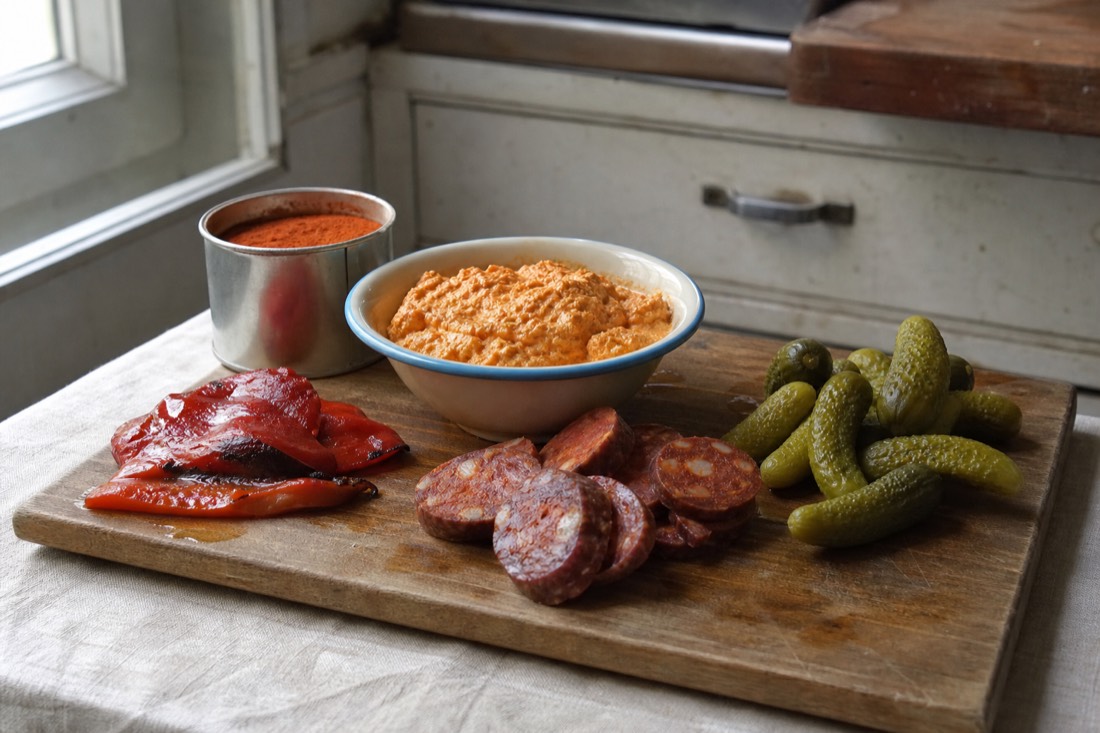
| Savanyúság | Pickled cucumbers, peppers, cabbage | Nothing floury, a reliable side anywhere |
| Kolbász, hurka | Sausage and blood or liver sausage | Fillings vary by producer, ask what binds them |
| Körözött | Paprika curd-cheese spread | Free of flour, the bread under it is the issue |
| Sör | Beer | Barley based, so it goes on the checking list |
| Bor, pálinka | Wine and fruit brandy | Grapes and fruit, no grain involved |
Two of those rows do the most work. Pörkölt is the dish I would point a coeliac at in an ordinary restaurant, because the traditional method has no thickener at all: onions, lard, paprika, meat and time. And the drinks row catches people off guard at the end of an evening, when the Hungarian wine list turns out to be the easier column anyway. My Hungarian wine guide covers what to order from it.
How Do You Explain A Coeliac Diet At A Budapest Table?
Lead with "lisztérzékeny vagyok", then ask about the specific mechanism rather than the dish: is there a roux, is it breaded, is there pasta in it. Hungarian kitchens answer mechanism questions accurately even when the phrase "gluten-free" means little to them, because roux and breadcrumbs are things every cook here can see.
The mistake visitors make is asking a yes-or-no question about a whole plate. "Is the goulash gluten-free" invites a guess. "Is there csipetke in the goulash" invites a fact. Hungarian cooking is transparent about its own components, and every one of the flour-carrying components has a plain Hungarian name that any server can check with the kitchen in a sentence.
Keep this second card on your phone alongside the first one. The left column is what you say, and the right column is why that particular word gets you a straight answer.
| Hungarian | Say it like | Means | Why ask it |
|---|---|---|---|
| Ez tartalmaz lisztet? | ez TOR-tol-moz LEES-tet | Does this contain flour? | The clearest single question on any menu |
| Panírozva van? | PA-nee-roz-vo von | Is it breaded? | Settles the whole rántott family at once |
| Van benne tészta? | von BEN-neh TES-to | Is there pasta in it? | Catches csipetke, nokedli and soup noodles |
| Milyen olajban sütik? | MEE-yen OH-loy-bon SHOO-tik | What oil is it fried in? | Lets the kitchen tell you about its fryers |
| Van gluténmentes étlap? | von gloo-tayn-MEN-tesh AYT-lop | Is there a gluten-free menu? | Some kitchens keep one behind the counter |
| Búza, árpa, zsemlemorzsa | BOO-zo, AR-po, ZHEM-leh-mor-zo | Wheat, barley, breadcrumbs | The three words to scan an allergen list for |
Say the first phrase, then pick whichever follow-up fits the dish. In my experience the failure mode is never dishonesty; it is a cook who has genuinely never thought about the flour in a thickener, which is why naming the thickener works better than naming the diet.
How Do You Build A Food Day When The Classics Are Wheat-heavy?
Anchor the day on the dedicated venues and fill the gaps with naturally flour-free food: a market morning of cheeses, pickles and cured meat, a paprika-stew lunch anywhere, then a dedicated kitchen for the evening when you want the breaded Hungarian spread without a conversation.
Geography does a lot of the planning for you. Bohémtanya on Paulay Ede utca sits minutes from Deák Ferenc tér, in the middle of everything you were going to walk past anyway, so the one meal where you want zero uncertainty slots into the centre of the day without a detour. Free a Glutenmentes Pekseg on Szentendrei út is the opposite case, well north of the centre, so treat it as a deliberate trip rather than a drop-in, and go on a day you were heading that way regardless.
| Part of the day | Where it works | What you are eating | The fallback |
|---|---|---|---|
| Morning | Market halls | Cheeses, cured meat, pickles, fruit, paprika to take home | Coffee and a bought-in bake from a dedicated bakery |
| Mid-morning sweet | Fittnass, Zichy Jenő u. 43 | Pastry and ice cream in a gluten-free cone | Fruit from a market stall |
| Lunch | Any traditional kitchen | Pörkölt or paprikás with potatoes or rice instead of dumplings | Grilled meat and pickles, available everywhere |
| Afternoon | Free a Glutenmentes Pekseg, Szentendrei út 89 | Gluten-free pizza by the slice, including a daily vegan option | A café stop, coffee is never the problem |
| Dinner at a dedicated venue | Bohémtanya, Paulay Ede u. 6 | Confirm the current menu and preparation practices | Check other dedicated venues for your route |
| Evening drink | Wine bars and cellars | Hungarian wine and pálinka | Cheese and charcuterie plates |
That structure survives contact with a real trip because it only needs one venue to work per day. The Great Market Hall guide covers the ground-floor stalls where the cheese and pickle counters are, and if you want the whole trip mapped out, my 3-day Budapest food itinerary gives you the shape to hang these stops on.
One planning note about the counts. Six dedicated bakeries and nine dedicated restaurants is a real number for a city this size, but they are not evenly spread, and two of them being on your side of the river matters more than the total does. Pick your base with that in mind.
What Should You Write In The Booking Message For A Tour Or Class?
Short and specific beats apologetic. Name the diet in one line, name the mechanisms, say which platform booking is yours, and ask what they can confirm. Operators arrange stops in advance, so a message a few days out is the difference between a swap and a shrug.
State that you have coeliac disease and need cross-contact precautions, then ask about shared utensils, preparation surfaces, fryers, ingredients and serving arrangements. Obtain a specific reply before booking; a checkbox or willingness to swap one dish is not confirmation that the experience suits your requirements.
What you should not do is expect a promise. Nobody running a group walk controls the kitchen at every stop, and an honest operator will tell you which parts they can adjust and which they cannot. Read the reply as information rather than a guarantee, and if the answer is vague, you still have the dedicated venues and a perfectly good self-guided day.
A shared cooking-class kitchen can still involve cross-contact even when ingredients are changed. The reviewed Foodapest class explicitly cannot accommodate coeliac requirements. No coeliac-suitable culinary experience has been established in this verified shortlist.
What Should You Carry, And Where Do You Restock?
Carry the phrase card, something to eat that needs no kitchen, and a plan for one dedicated stop per day. Restocking is genuinely easy here: the dedicated bakeries sell take-away bakes, and market stalls hand you cheese, cured meat, fruit and pickles that never involved a mixing bowl.
The pocket kit is small. A screenshot of the two phrase tables above, so you can hold up your phone in a loud room. A tin of something for the gap between a late museum and a late dinner, because Budapest eats dinner later than most visitors expect. And an address, one per day, of a place where you are not going to have to ask anything at all.
Restocking is where this city quietly wins. A market hall is a whole afternoon of naturally flour-free food sold by weight: sheep cheese, kolbász to ask about, roasted peppers, a hundred grams of pickles, walnuts, dried fruit, honey, paprika to take home. None of it needs a kitchen and none of it needs a question about roux. The dedicated bakeries cover the other half, the bread-shaped hole, and Fittnass adds the ice cream cone that most travellers assume they have given up for the trip.
Budget-wise, none of this carries an allergy premium worth planning around. The fried chicken breast with fries on Bohémtanya's English menu is listed at 5,990 forints, which is an ordinary mid-range Budapest price rather than a surcharge for the dedicated kitchen, and my food prices guide shows where that sits against the rest of the city.
Is Budapest good for celiacs?
Yes, with planning. The city has six dedicated gluten-free bakeries and nine fully gluten-free restaurants as of 2026, including a traditional Hungarian one, Bohémtanya. Outside dedicated venues the cuisine is wheat-heavy, so ask about roux, dumplings and breading.
Is goulash in Budapest gluten-free?
The soup itself usually is, built on beef, potato, onion and paprika. The catch is csipetke, small pinched wheat pasta often added before serving. Ask for it without, or order at a dedicated gluten-free kitchen.
How do you say gluten-free in Hungarian?
Gluténmentes. The everyday word for coeliac is lisztérzékeny, literally flour-sensitive, so "lisztérzékeny vagyok" means I am coeliac. Both are widely understood in Budapest restaurants.
Can coeliacs join Budapest food tours?
The checked food tours do not establish suitable coeliac cross-contact arrangements. Carpe Diem cannot accommodate gluten-free diets and the Foodapest cooking class excludes coeliac requirements. Confirm any other operator’s specific arrangements before booking.
Choose Your Budapest Experience
Foodapest Evening Food Walk. Taste lángos, chimney cake and seasonal Hungarian dishes on a guided food walk; gluten-free substitutions can be requested. Have a date in mind? Check it before arranging the rest of your Budapest day.
180 minutes. Evening option meets at Mercure Korona and skips the market. Some tastings may be substituted or skipped. Gluten-free options do not make this suitable for coeliac disease: the operator cannot guarantee against cross-contact.
Choose a date to see scheduled departures. Final availability and price are confirmed on Viator.
No verified experience fits those requirements. Adjust your choices, or keep the independent plan described above.
Compare Options And Fit Your Plans
General recommendations until you choose. Sightseeing cruises use recorded commentary; the dinner cruise has no guide. All selected activities meet in central Pest; use the operator confirmation for the exact point and option.
- Foodapest Market To Tavern: 180 minutes. Traditional dishes, street-food tasters and wines with an English-speaking local guide. Daytime option visits the market; the 17:00 option skips it. Notify the operator about vegetarian or vegan substitutions. Not suitable for coeliac requirements.