The grand cafés are not dead
Gerbeaud, Central and the New York Café in 2026, founding dates, cake prices, service charges, and how locals really use Budapest's grand coffeehouses.
 By Gábor Kovács, Budapest local specialist and experience guide
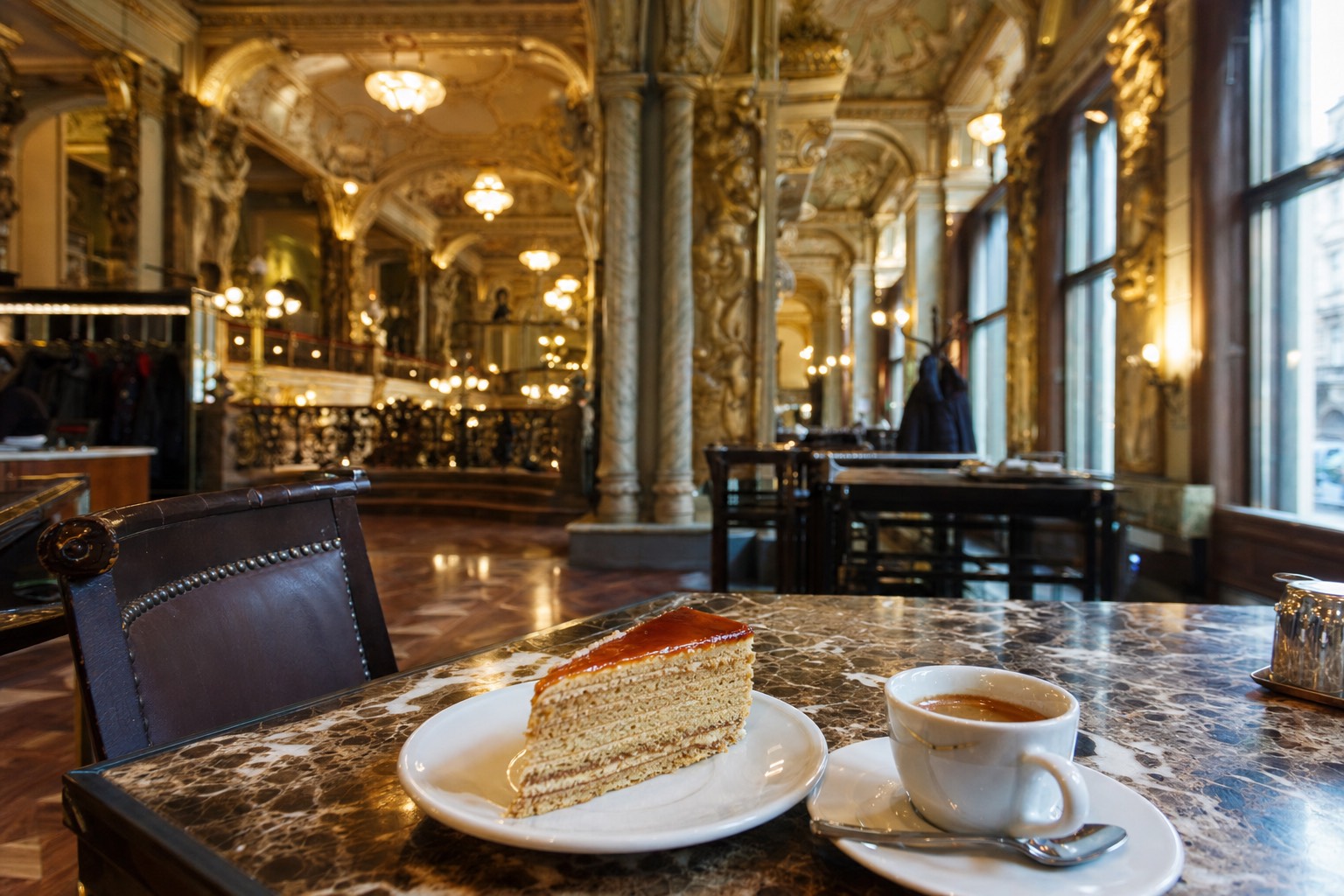
My grandfather drank his coffee standing at a counter because sitting down cost more, and he considered the grand cafés a conspiracy against working men. He still took my grandmother to Gerbeaud every name day of her life. That contradiction is the whole story of Budapest's coffeehouses: we grumble about them, we cannot quit them, and every few years someone writes their obituary while the queue outside grows.
Explore the café stories below before choosing where to sit. A guided coffeehouse walk can connect the rooms with the history behind them.
Booking choice: Explore grand coffeehouses with an art historian, including New York Café in the documented route. Explore Private Café History Walk
Are Budapest's Grand Cafés A Tourist Trap Now?
No, but the three survivors serve different purposes now. Gerbeaud, Central and the New York Café are all real, open and busy in 2026. One is a pastry institution, one is where locals still sit with a newspaper, and one is a gilded photo set that happens to serve coffee.
The obituary writers are wrong on the facts. All three houses are trading, full and, by the prices, healthy. What has changed is the division of labor between them, and knowing it is the difference between a good afternoon and an expensive shrug. This piece is the tour of the whole cluster. If you only care about the famous one, the queue tactics and whether the gold ceiling justifies the bill, that single-café verdict has its own page in our New York Café guide. Here I want to argue something bigger: the coffeehouse habit itself never died here, it just moved between rooms.
How Old Are These Coffeehouses Really?
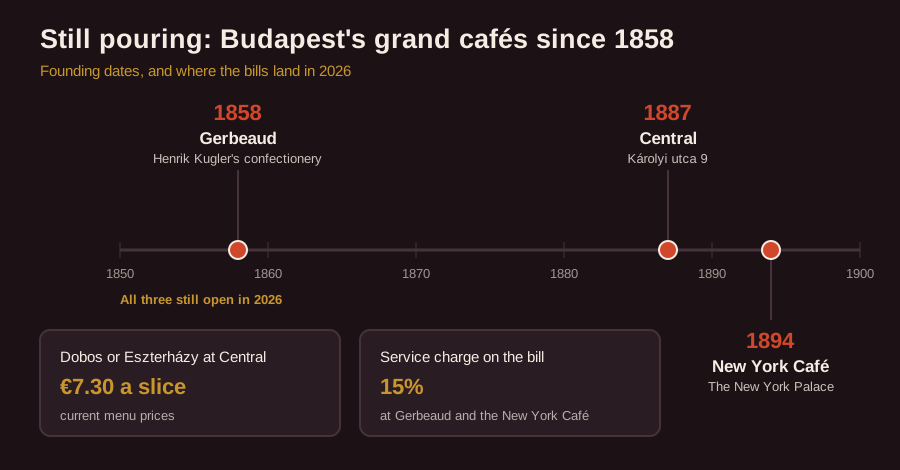
Older than most countries' cafés. Gerbeaud traces to 1858, when Henrik Kugler opened his confectionery. Central poured its first coffee on August 7, 1887 on Károlyi utca. The New York opened in 1894 inside the New York Palace, built as an insurance company's headquarters.
The dates are worth sitting with. Gerbeaud's own history starts with Kugler's shop in 1858, before settling on what is now Vörösmarty Square; the house predates the unified city of Budapest itself. Central's record pins its opening to a single summer day in 1887, in the house of Lajos Erényi Ullmann on Károlyi utca 9. And the New York's history begins in 1894, when an American insurance company decided its Budapest headquarters needed a café worthy of a palace. Writers, editors and penniless poets did the rest.
| Café | Opened | Founder or builder | Where |
|---|---|---|---|
| Gerbeaud | 1858 | Henrik Kugler's confectionery | Now on Vörösmarty Square |
| Central | August 7, 1887 | House of Lajos Erényi Ullmann | Károlyi utca 9 |
| New York Café | 1894 | New York Life Insurance headquarters | The New York Palace |
Which Café Do Locals Actually Use?
Central, mostly. It is the one where you still see people reading, working and arguing over a single coffee for an hour. Gerbeaud is for occasions, a name-day cake with your grandmother. The New York is for visitors, and locals only go when someone is in town.
This split is unofficial but ironclad. Central kept the old coffeehouse contract: buy one espresso, occupy a marble table indefinitely, nobody hovers. I have edited half my life's paperwork under its lamps. Gerbeaud is ceremony, the box of cakes tied with ribbon, the place my family goes when something deserves marking. The New York is spectacle, and I do not say that as an insult; the room is genuinely one of Europe's most beautiful interiors. But you go once, you photograph the ceiling, and the regulars you see are guides. The Vienna comparison comes up constantly here, and my Vienna versus Budapest piece settles that argument at length.
| Café | What visitors do | What locals do |
|---|---|---|
| Gerbeaud | Terrace coffee on the square | Name-day cakes, boxed pastries to carry home |
| Central | Lunch stop on a walking day | Read, work, linger over one coffee |
| New York Café | Queue, photograph, order the showpiece | Bring out-of-town guests, once a year at most |
What Does Cake Cost At A Grand Café In 2026?
At Central Grand Café the classic Dobos and the Eszterházy each cost €7.30 on the current menu. Gerbeaud lists prices in forints and adds a 15 percent service fee to everything; the New York Café adds the same mandatory 15 percent. Read the small print before the bill surprises you.
The Dobos, for first-timers, is the caramel-topped sponge that Hungarian confectionery is proudest of; the Eszterházy is its walnut-cream rival, and choosing between them at Central's current menu prices is the cheapest form of time travel available in this city. Where those cakes came from, and the rest of the national sweet canon, is mapped in our Hungarian food guide. Seven euros and change for a legend, table service and an hour of marble and quiet is, by 2026 European standards, honestly fair.
| Cost item | Where | The number |
|---|---|---|
| Dobos cake | Central | €7.30 |
| Eszterházy cake | Central | €7.30 |
| Service fee | Gerbeaud | 15% on all food and drink |
| Service charge | New York Café | 15%, mandatory, on the bill |
What Is The 15 Percent On The Bill?
Szervizdíj is a service charge added automatically to the bill, 15 percent at both Gerbeaud and the New York Café. It replaces the tip, so you are not expected to add another 10 percent on top. Check the receipt line before you double-pay; everyone does it once.
Szervizdíj, literally service fee, is the item that generates the most indignant café reviews from visitors, and most of that indignation is a misunderstanding. The charge is disclosed on the menus, it is legal, and it is how the staff get paid for carrying silver trays across parquet all day. The mistake is paying it and then tipping a full extra round on top out of habit. The full etiquette, including when a separate tip is actually welcome, is in our tipping and service charge guide. Short version: read the receipt, then decide.
How Would A Local Plan One Café Afternoon?
Start with morning pastry at Gerbeaud on Vörösmarty Square, walk ten minutes to Central for a proper sit-down coffee and the Dobos, then save the New York for late afternoon when the gold catches the light. Three cafés, one afternoon, and every era of Budapest between them.
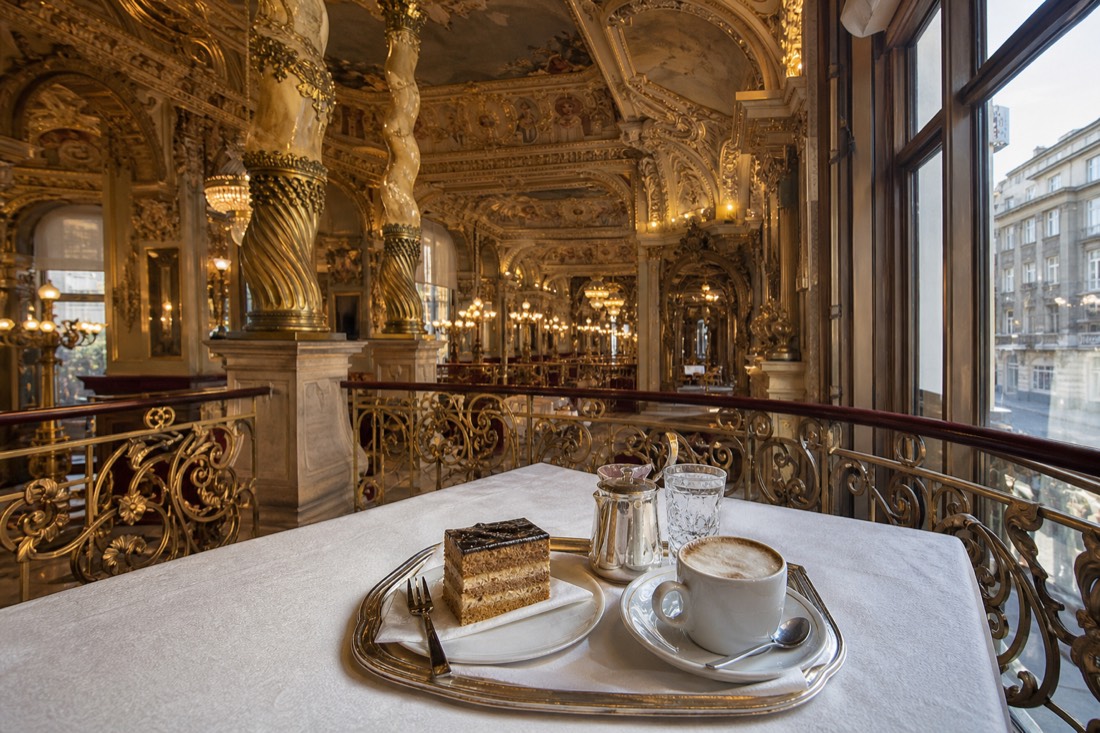
The order matters. Gerbeaud in the morning gets you the counter before the square fills, and a boxed pastry for later. Central at midday is the long sit, the one where you actually rest your feet and read something. The New York is staged last deliberately: the room is theater, and theater belongs to the evening. By the time the chandeliers come on you will have spent less than the cost of one hotel-bar cocktail round on three of Europe's great interiors. Do not attempt all three cakes in one day. I have. The walk home was long.
Where Does A Wine Walk Fit Into A Coffeehouse Day?
Neatly, since Hungarian coffeehouse culture and wine culture grew up together. The Taste Hungary Culinary and Wine Walk is a five-hour walk through Hungarian food and wine with 412 reviews logged on Viator. Do the cafés in the morning, the walk from mid-afternoon, and dinner solves itself.
Coffeehouses and Hungarian wine can share a day, but check the actual start time before putting a long food walk after a café morning. A shorter seated tasting is easier to fit between other plans.
Will The Grand Cafés Still Be Here In Twenty Years?
They have outlived empires, wars and every fashion for drinking coffee standing up. Budapest keeps restoring these rooms rather than replacing them, and the prices say the business model works. Order the Dobos, sit longer than feels polite, and you are keeping the tradition alive.
My grandfather's conspiracy theory had it backwards. The grand cafés were never against working people; they were the one palace a person could rent for the price of a coffee. That deal still stands at Central every single day. So no, they are not dead, and they are not museums either, whatever the queue outside the New York suggests. They are working rooms with very good cake. Go use one the way it was built to be used: slowly, with a newspaper, until the waiter has refilled your water twice and the afternoon has gone somewhere better.
Choose Your Budapest Experience
Private Café History Walk. Explore grand coffeehouses with an art historian, including New York Café in the documented route. Have a date in mind? Check it before arranging the rest of your Budapest day.
180 minutes. Meet outside Gerbeaud at Vörösmarty tér 7–8. Refreshments and tips cost extra. This is a guided café-history walk, not a New York Café table reservation or queue-skip ticket.
Choose a date to see scheduled departures. Final availability and price are confirmed on Viator.
No verified experience fits those requirements. Adjust your choices, or keep the independent plan described above.
Compare Options And Fit Your Plans
General recommendations until you choose. Sightseeing cruises use recorded commentary; the dinner cruise has no guide. All selected activities meet in central Pest; use the operator confirmation for the exact point and option.
- Private Coffee And Cake Walk: 150 minutes. Discover Budapest’s grand cafés, neighbourhood confectioneries and strudel shops with a private local guide. Confirm the pickup point with the operator. Coffee and dessert stops form the experience; dietary suitability and specific cafés need confirmation.