Is New York Café Budapest Worth It? An Honest Local's Answer
The gilded hall on the Grand Boulevard really is that beautiful. Whether the queue and the bill are worth it depends on how you play it, so here is the honest version.
 Written with Gábor Kovács, Budapest local specialist and experience guide
Short answer
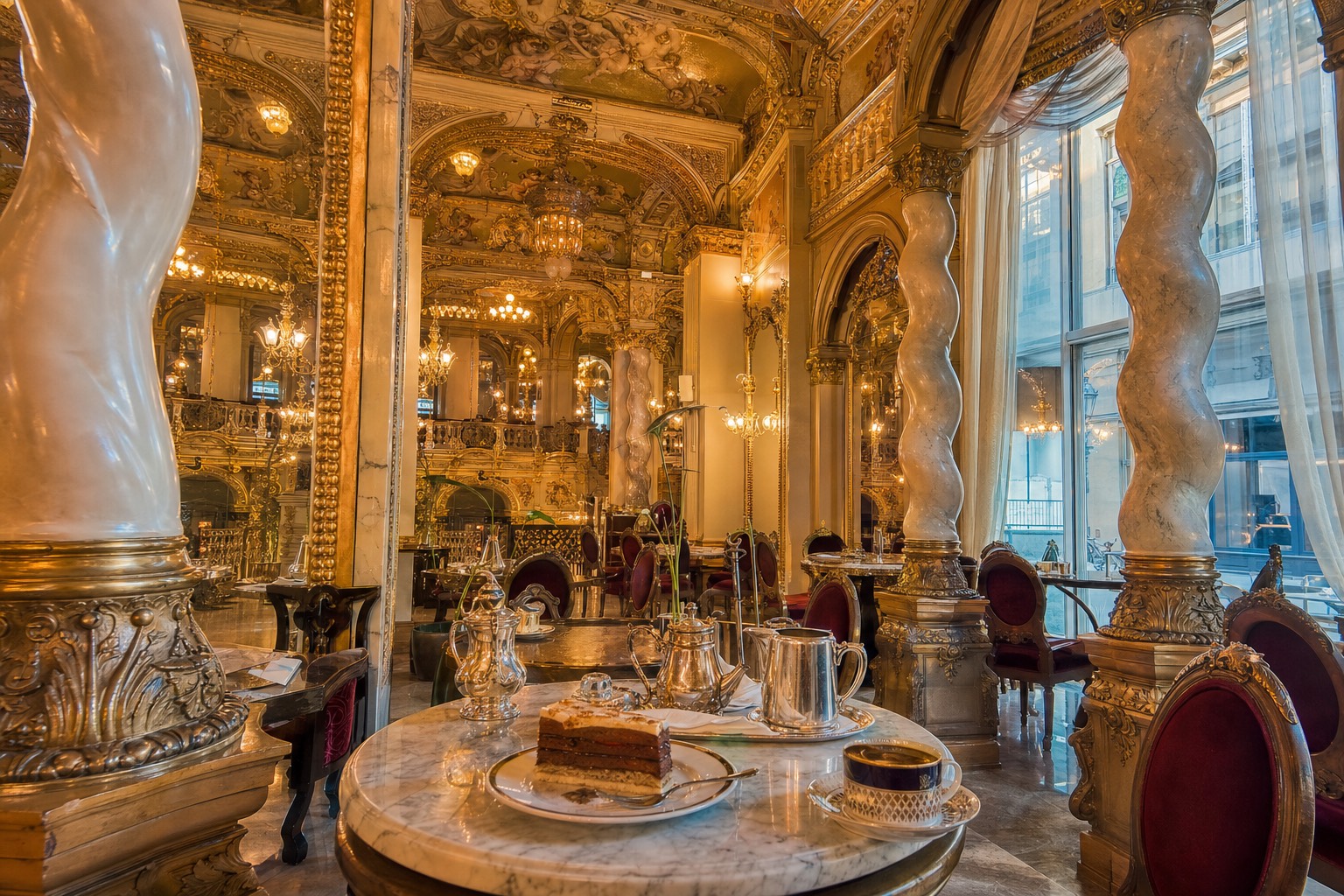
Yes, once. New York Café opened in 1894, has been called the most beautiful café in the world, and the interior genuinely earns the tag. Expect a 30 to 50 minute queue at peak times, daytime seating that cannot be reserved, and a coffee-and-cake bill north of 11,000 HUF with the automatic 15 percent service charge.
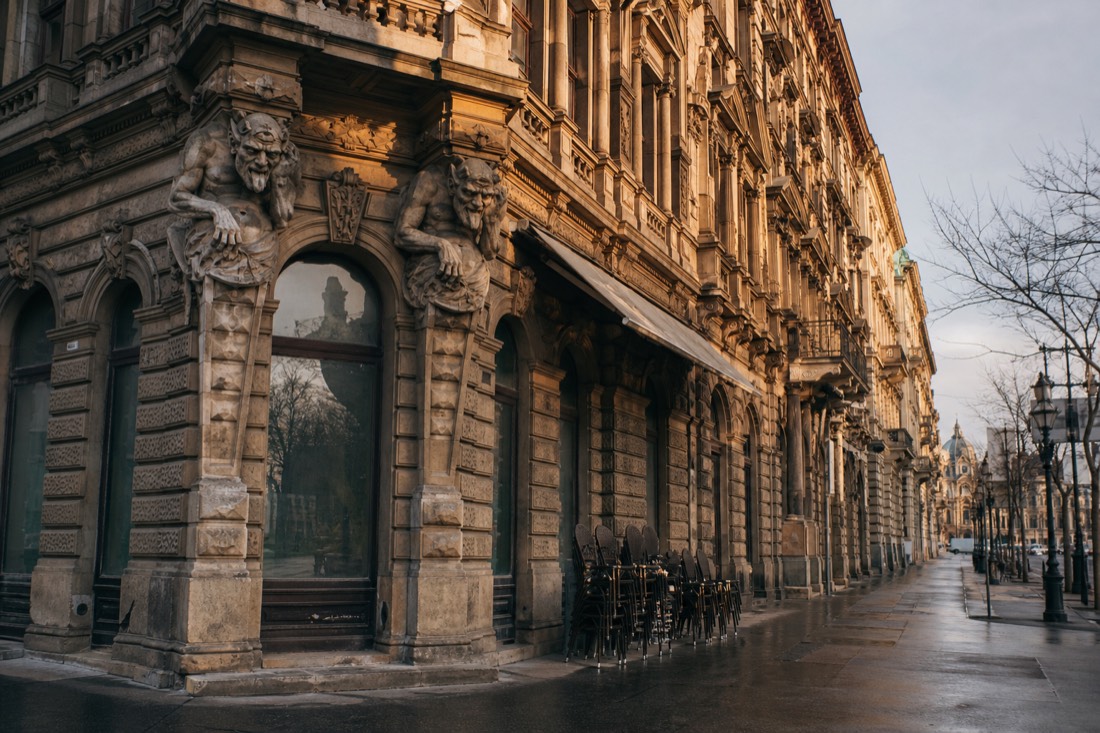
I walk past New York Café most weeks, and the queue on Erzsébet körút tells its own story: a line of visitors under the stone devils of the facade, phones already out. I have sat inside on a quiet winter morning with a coffee and the frescoes to myself, and I have also seen the Saturday scrum. Both versions are real. This guide covers the famous bits, then the parts the brochures skip: the wait, the bill, and the moments when a different café is the smarter call.
Use the practical café guide below to decide whether to visit. For a wider perspective, explore New York Café within a guided coffeehouse route.
Booking choice: Explore grand coffeehouses with an art historian, including New York Café in the documented route. Explore Private Café History Walk
Is New York Café Budapest Worth It?
Yes, for one unhurried visit, and I say that as a local who is allergic to tourist traps. The 1894 interior is genuinely one of Europe's great rooms, and no photo prepares you for the ceiling. What you are buying is the space, not the best coffee in Budapest, so go once, go early, and order modestly.
The honest framing matters. You will pay several times the citywide rate for coffee, and reviewers on TripAdvisor consistently describe waits of 30 to 50 minutes at busy periods. If your idea of a café is a quick, cheap espresso, this is the wrong building. If you treat it as a ticketed monument that happens to serve cake, the math changes completely. A palace interior for the price of a fancy dessert is still one of the better deals in European sightseeing.
What tips it to "worth it" for me is that the room is not a replica. Writers really did run magazines from these tables, and the restoration kept the bones intact. Pair it with a walk through the city's other coffee houses, which I cover in my grand café culture piece, and the visit becomes a chapter in a story rather than a queue for a selfie.
Why Is New York Café Famous?
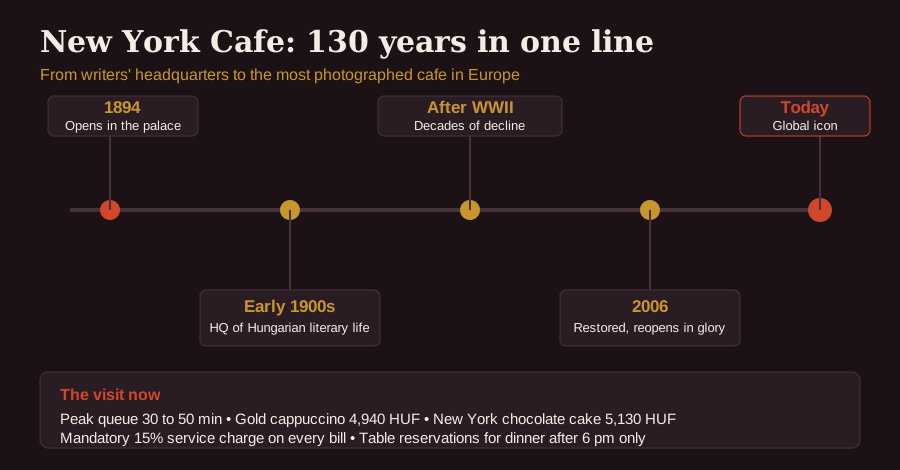
It opened in 1894 as the ground-floor showpiece of the New York Palace, built for an American insurance company, and became the headquarters of Hungarian literary life. Legend says writer Ferenc Molnár threw the key into the Danube so it could never close. The 2006 restoration returned the gilded hall to its original glory.
The fame rests on three layers. First, the architecture: twisted columns, Venetian chandeliers, ceiling frescoes, more gold leaf than seems structurally sensible. Second, the literary history. Around the turn of the century this was where editors held court, and the café famously offered writers a cheap "writers' dish" so the broke ones could keep working at its tables. Hungarian literature's golden generation was partly written in this room.
Third, the modern chapter. After the Second World War the building fell on hard times and the café spent decades in various degraded states before a full restoration reopened it in 2006 as part of a luxury hotel. That reopening is what turned a faded legend back into a destination, and social media did the rest. The devil statues on the facade, by the way, are original: the architect's little joke about temptation, which feels fitting for a room this seductive.
Is It Really The Prettiest Café In The World?
It has worn the "most beautiful café in the world" title for years, and standing under the frescoed ceiling it is hard to argue. Vienna and Paris have grander pastry and older institutions, but as pure spectacle, a full Italian Renaissance-style palace hall serving cappuccino, nothing in Europe quite matches it.
Titles like this are marketing catnip, so here is the local read. Budapest had hundreds of coffee houses at the turn of the century and several survivors are lovely. What sets New York Café apart is scale and completeness. Others give you a beautiful room; this one gives you a two-storey hall where every surface, ceiling paintings to bronze lamp brackets, belongs to one 1894 vision.
Is the experience the prettiest? That depends on the hour. At 9 am on a weekday, with light coming through the tall windows and a pianist warming up, yes, easily. At 3 pm on a summer Saturday, when every table is turning over for photos, the room is still stunning but the mood is airport lounge. The building always delivers. The atmosphere is yours to time correctly.
How Long Is The Wait At New York Café?
Plan for 30 to 50 minutes in the queue at peak times without a reservation, based on a steady run of recent visitor reports. Weekday mornings right at opening are the reliable low point. Mid-afternoon, weekends, and December are the worst, when the line regularly bends down the boulevard.
The queue is the single biggest complaint in reviews, so treat timing as the main skill of the visit. The café runs first-come, first-served through the daytime, which means the line is the only currency that matters before evening. Here is how I would play the week:
| When you show up | Queue reality | My read |
|---|---|---|
| Weekday, right at morning opening | Shortest of the week, often walk straight in | The move for photos and quiet |
| Weekday mid-afternoon | Building, 20 to 40 minutes typical | Workable off-season, painful in summer |
| Weekend midday to afternoon | Peak, 30 to 50 minutes is normal | Only if you enjoy queuing |
| After 6 pm with a dinner reservation | No queue, you have a booked table | Best for a longer, calmer evening |
| December holiday season | Longest lines of the year | Go at opening or pick another café |
One more local note: the queue moves in bursts because groups occupy tables for a long time. Do not judge your wait by the length of the line alone. A short line behind slow tables can outlast a long line on a fast morning.
Can You Reserve A Table At New York Café?
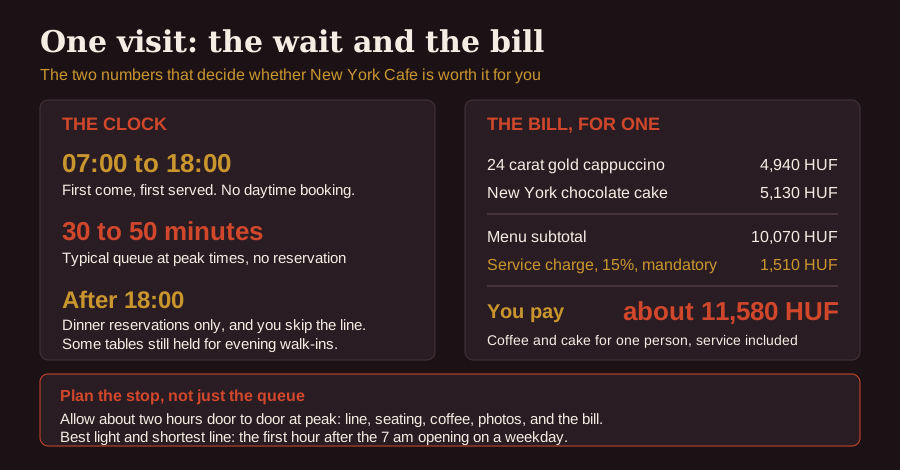
Only partly. The official policy is that table reservations are taken for dinner after 6 pm only. From 7 am to 6 pm seating is strictly first-come, first-served, and the café also keeps some tables free for walk-ins in the evening. There is no way to book a daytime coffee slot.
This surprises a lot of visitors, so it bears repeating: you cannot reserve your way past the daytime queue. Every "skip the line" scheme you might hope for does not exist for the classic coffee-and-cake visit. The system is democratic and slightly brutal. Everyone stands in the same line, influencers included.
The dinner reservation is the loophole worth knowing. Book a table after 6 pm and you walk in past the queue to a calmer room, order a proper meal or just dessert and wine, and get the chandeliers lit against the dark windows, which is arguably the hall at its best. The trade-off is that evening pricing is restaurant pricing. If your goal is the iconic daytime light for photographs, there is no substitute for turning up early. If your goal is to actually enjoy the room, evening wins.
What Should You Order At New York Café?
Order the things built for the room: the 24 carat gold New York cappuccino, dusted with edible gold, and the New York chocolate cake. Skip full meals at daytime prices. One showpiece coffee and one slice per person gets you the experience at the lowest sensible spend.
The menu leans theatrical, and honestly, lean into it. You did not queue forty minutes for a sensible filter coffee. The gold-dusted cappuccino is the signature order, the house chocolate cake is the reliable partner, and the cakes generally are proper Hungarian pastry work rather than props. Service comes with silver-tray formality that suits the setting.
Save appetite for the food Budapest eats beyond its grand cafés: lángos, market-hall dishes and street-food counters. The what to eat guide maps those choices for an independent afternoon.
How Expensive Is New York Café Really?
Landmark expensive. The gold cappuccino is 4,940 HUF and the New York chocolate cake 5,130 HUF on the current menu, and a mandatory 15 percent service charge lands on every bill. Coffee and cake for one runs about 11,600 HUF once the charge is added, several times the city norm.
The number that catches people out is not the menu price, it is the szervizdíj (the Hungarian service charge added automatically to restaurant bills). At New York Café it is 15 percent, printed on the bill as a service line, and it is not optional. Recent visitors confirm it appears on every check. No additional tip is expected on top; I explain how that works citywide in the tipping and service charge guide.
| Order | Menu price | With 15% service charge |
|---|---|---|
| 24 carat gold New York cappuccino | 4,940 HUF | about 5,680 HUF |
| New York chocolate cake | 5,130 HUF | about 5,900 HUF |
| Cappuccino + cake for one | 10,070 HUF | about 11,580 HUF |
| The same for two people | 20,140 HUF | about 23,160 HUF |
Against Budapest's everyday café prices, which I break down in the food prices guide, that is a steep multiple. Against admission to a palace with table service included, it reads differently. Decide which comparison you are making before you sit down, and the bill will not sting.
What Are The Best Alternatives To New York Café?
If the queue kills the mood, Budapest still has beautiful historic coffee houses with shorter lines and gentler bills, plus a living café culture in the districts. You lose some gold leaf and gain a table within minutes. For many travelers that trade is the right one.
The grand café tradition here never belonged to one address. The city's surviving coffee houses each carry a piece of it: literary ghosts in one, better pastry in another, an easier chair in most. I walk through my favorites, and how to build a proper café afternoon around them, in the grand café culture story.
Here is how the gilded stop stacks up against the food-first ways to spend the same window of a Budapest day:
| Option | Time it takes | What is on the record |
|---|---|---|
| New York Café, coffee and cake | About 2 hours with a peak queue | Roughly 11,580 HUF for one, service charge included |
| Carpe Diem tasting walk | 150 minutes | Four eateries and three drinks; quote depends on date and party |
| Foodapest market-to-tavern walk | 3 hours | 12+ tasters including goulash and chimney cake, 4.9 across 581 GetYourGuide reviews |
And if what you actually want is Budapest's food story rather than one famous room, spend the morning at the Great Market Hall instead. The queue is for lángos, it moves fast, and nobody charges you extra for the architecture.
How Does The New York Café Queue Actually Work?
The line runs first-come, first-served from 7 am to 6 pm, and it moves in bursts rather than at a steady pace. There is no separate fast entrance and no daytime booking. A dinner reservation after 6 pm is the only documented way to walk past the queue.
Understanding the burst pattern saves more time than any trick. Tables here turn slowly, because almost nobody orders a quick espresso and leaves. Parties settle in, photograph the ceiling, order dessert, then photograph the dessert. So the line stands still for stretches and then swallows six groups at once when a large table finally pays. A queue of twenty people at 9 am can clear faster than a queue of ten at 3 pm.
The clock matters more than the calendar. From the 7 am opening the room is close to empty, the light through the tall windows is at its best, and that first hour is the only part of the day when walking straight in is normal. By late morning the line has formed. It stays formed through the afternoon and only breaks when daytime service ends at 6 pm and the evening, reservation-led operation takes over.
One practical note about the address. The café occupies the ground floor of the New York Palace on the Grand Boulevard, and the hotel side of the building is not a shortcut: everyone waits at the same café door. So plan the whole stop rather than only the wait.
| Part of the visit | Allow roughly | Why it runs that long |
|---|---|---|
| Finding the end of the line on Erzsébet körút | A few minutes | The queue bends along the facade, so the back of it is not obvious |
| Standing in the queue at a peak hour | 30 to 50 minutes | The reported peak-time range, driven by slow table turnover |
| Being seated and ordering | Allow about 10 minutes | Silver-tray service is formal and unhurried by design |
| Coffee and cake, eaten without rushing | Budget roughly 45 minutes | This is the part you queued for, so do not compress it |
| Photographs from your seat and the gallery stairs | Around 10 minutes | The best angles come from the upper level, not from your table |
| Getting the bill and paying | Allow about 10 minutes | Table service means waiting to be found, twice |
Two hours door to door is a realistic peak-season allowance. An off-season weekday morning can halve it.
What Is Worth Ordering If You Are Paying Café Prices Anyway?
Order the two things the room was built for, then stop: the 24 carat gold cappuccino at 4,940 HUF and the New York chocolate cake at 5,130 HUF. Everything else carries landmark pricing. A daytime meal here costs restaurant money without giving you the evening version of the hall.
The mistake is treating this like a normal café menu, where you graze and add as you go. With a mandatory 15 percent service charge landing on every line, the bill grows faster than the printed prices suggest, and the second round is where most visitors quietly double their spend. One showpiece drink and one slice each is a complete visit.
There is a sharing version, and nobody will look at you strangely for it. Two coffees and one cake between two people is an ordinary Central European order, and it lands well under the two-of-everything total. If your visit is really about the ceiling rather than the sugar, that is the efficient shape of it.
What does not belong here is the Hungarian food you can eat better and cheaper two districts away. Lángos, market stews, sausage counters and chimney cake belong to a different afternoon, and the street food guide maps that side of the city. Save your appetite. Let this stop be coffee, cake and gold leaf.
| The order | Do it or leave it | The reasoning |
|---|---|---|
| 24 carat gold cappuccino | Do | The one drink that only makes sense under this ceiling, 4,940 HUF before service |
| New York chocolate cake | Do | The reliable partner to the coffee, 5,130 HUF before service |
| One cake shared between two | Do | Halves the sweet spend and reads as perfectly normal here |
| A full lunch or dinner in daytime | Leave it | Landmark pricing without the lit chandeliers that make the evening worth it |
| A second round of coffee | Leave it | Every extra line carries the 15 percent charge along with it |
| Hungarian street food and market snacks | Leave it | Better, cheaper and more fun in the market halls and food streets |
Is New York Café Stuffy, And Can You Just Have A Coffee?
No, and yes. There is no enforced daytime dress code, and one coffee per person is a legitimate order nobody will question. The formality sits in the service style, silver trays and unhurried waiters, not in how the room treats a visitor wearing walking shoes.
The intimidation is anticipatory. People read the words palace, gold leaf and landmark prices, then arrive braced for a head waiter scanning their jacket. What actually happens is that someone shows you to a marble table, hands over a menu, and treats a single cappuccino with the same ceremony as a full lunch. On any given afternoon the hall holds daypacks, camera straps and jet lag alongside a handful of people who dressed for the occasion.
Evening runs in a different register. Diners after 6 pm tend to dress up, the light is candlelit rather than daylight, and your table is a booked table with a full menu attached. If you want the version with a jacket and a wine list, that is the sitting to aim for.
The etiquette that genuinely matters concerns the table, not the clothes. Everyone still outside is waiting for the seat you are in, so an hour is a generous stay and two is pushing your luck. Photograph from your seat and from the gallery stairs rather than wandering between other people's tables. Read the bill before adding anything, since the 15 percent is already sitting on it, a habit I unpack for the whole city in the service charge guide.
Who Does Gábor Tell To Skip New York Café?
Gábor Kovács has guided international visitors around Budapest since 2022 and, by his own count, has hosted more than a thousand of them. He sends a fair share of them somewhere else entirely. The queue and the bill only pay off for travellers who want the room itself.
His filter is one question: what are you actually buying? If the answer is architecture, go, and go at opening. If the answer is coffee, this is an expensive way to drink an average cup, and half the city does it better for a fraction of the money. If the answer is Hungarian food, you are standing in the wrong building.
Four kinds of visitor get steered elsewhere. Anyone with a single free morning in Budapest, because fifty minutes in a line is a large slice of one morning. Families with small children at peak hours, since the queue offers no shade, no seats and nothing to look at. Travellers on a real budget, for whom 11,580 HUF is dinner for two somewhere excellent. And anyone who uses the phrase "quick coffee", because no quick version of this place exists.
Where he points them depends on appetite. Café people get the working coffeehouses in the grand café story, where a marble table costs a fraction and comes without a line. Hungry people get the Great Market Hall at opening. Travellers on a tight schedule get the honest version: the ceiling photographs beautifully in other people's pictures, and your one morning may be better spent eating.
How Does It Compare With Budapest's Other Grand Cafés?
As spectacle it wins outright, and it loses on nearly everything else. Central has poured coffee on Károlyi utca since 1887 and still lets you hold a table over one espresso. Gerbeaud has sold cake since 1858. Pick by what you want from the hour, not by fame.
Treat it as a ladder rather than a ranking. At the top for pure room sits the New York, and nothing in the city comes close: a two-storey 1894 hall where every surface answers to one design. The price of that is the line and the service charge. Step down one rung and you find cafés that trade gold leaf for a chair you get to keep.
Central is the working room. It kept the old coffeehouse contract, where one espresso buys an afternoon, which is why locals still read, write and argue in it. Gerbeaud is the occasion room: boxed cakes tied with ribbon, a terrace on Vörösmarty Square, a family sitting down for something worth marking. Both add their own service charge, so the difference is not that they are cheap. They are calmer, and the cake carries the visit instead of the ceiling.
For most visitors the right answer is a route rather than a single address, and the grand café culture story sets out the order that works: pastry early, a long sit at midday, the gilded hall late when the chandeliers finally do their job. If you only have one slot in the day, use the ladder below and stop agonising.
| What you actually want | Where that points | What you give up |
|---|---|---|
| The most spectacular café room in Europe | New York Café | A 30 to 50 minute peak queue and a 15 percent service charge |
| A table you can hold over one coffee | Central, on Károlyi utca since 1887 | The palace ceiling and the postcard shot |
| Cake as the main event, or boxed to carry home | Gerbeaud, trading since 1858 on Vörösmarty Square | A quiet room, since the square stays busy year round |
| All three inside one afternoon | Pastry early, long sit at midday, gold late | Two of the three cakes, if you want to enjoy dinner |
Is New York Café free to enter?
There is no entry fee, but it operates as a café and restaurant, so you are expected to order. In practice the minimum spend is one drink per person, and with landmark prices plus the 15 percent service charge, a coffee is effectively your ticket.
What is the dress code at New York Café?
There is no enforced dress code for the daytime café. Smart casual fits the room, and evening diners tend to dress up a little. Comfortable shoes matter more than fashion, since you may be standing in a queue before you sit under any chandeliers.
Can you just take photos and leave?
No. Entry is for guests, and the queue exists precisely because everyone inside holds a table. Order the cheapest coffee if the visit is really about the room, take your photos from your seat and the gallery stairs, and give the table back within an hour.
Choose Your Budapest Experience
Private Café History Walk. Explore grand coffeehouses with an art historian, including New York Café in the documented route. Have a date in mind? Check it before arranging the rest of your Budapest day.
180 minutes. Meet outside Gerbeaud at Vörösmarty tér 7–8. Refreshments and tips cost extra. This is a guided café-history walk, not a New York Café table reservation or queue-skip ticket.
Choose a date to see scheduled departures. Final availability and price are confirmed on Viator.
No verified experience fits those requirements. Adjust your choices, or keep the independent plan described above.
Compare Options And Fit Your Plans
General recommendations until you choose. Sightseeing cruises use recorded commentary; the dinner cruise has no guide. All selected activities meet in central Pest; use the operator confirmation for the exact point and option.
- Private Coffee And Cake Walk: 150 minutes. Discover Budapest’s grand cafés, neighbourhood confectioneries and strudel shops with a private local guide. Confirm the pickup point with the operator. Coffee and dessert stops form the experience; dietary suitability and specific cafés need confirmation.