A goulash crawl across the river
A local's four-stop goulash hunt across Budapest, from Gettó Gulyás to a family-run pub by the Chain Bridge, with real 2026 prices and styles.
 By Gábor Kovács, Budapest local specialist and experience guide
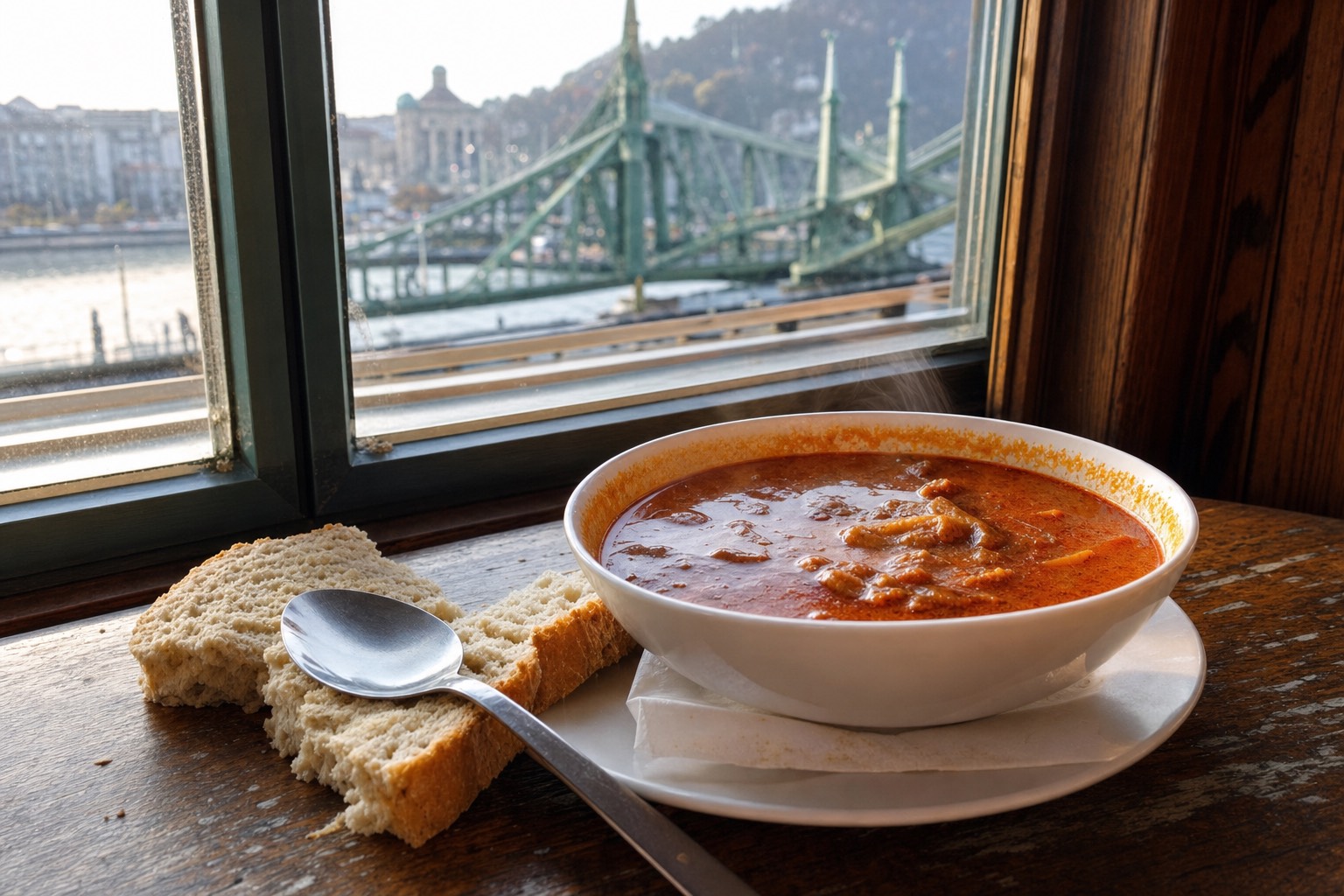
My mother taught me to judge gulyás, the paprika beef soup the rest of the world calls goulash, before tasting it. You look at the surface. Tiny orange pearls of paprika fat should float there, catching the light. No pearls, no depth, send it back. I spent one long Saturday testing her rule across four kitchens and two sides of the Danube, and I am still slightly full as I type this.
Use the independent guide below to plan your visit. Traditional dishes, street-food tasters and wines with an English-speaking local guide.
Booking choice: Traditional dishes, street-food tasters and wines with an English-speaking local guide. Explore Foodapest Market To Tavern
Why Hunt Goulash Across Four Kitchens Instead Of One?
Because no single kitchen shows the range. Budapest serves gulyás, the paprika beef soup most visitors call goulash, in traditional, modern and family-run versions, and the differences are the whole point. Four bowls across two districts and one bridge tell you more than any list ever could.
One warning before we walk. This piece is about where to eat goulash, not what it is. The history, the home recipe and the eternal soup-versus-stew argument all live in our goulash guide, and the wider context sits in the Hungarian food primer. Here I am only interested in bowls you can order this week. My route runs Pest to Buda, cheapest to priciest in spirit if not in exact order, and it ends at a pub my father has been loyal to since before I was born.
Where Does The Crawl Start In District VII?
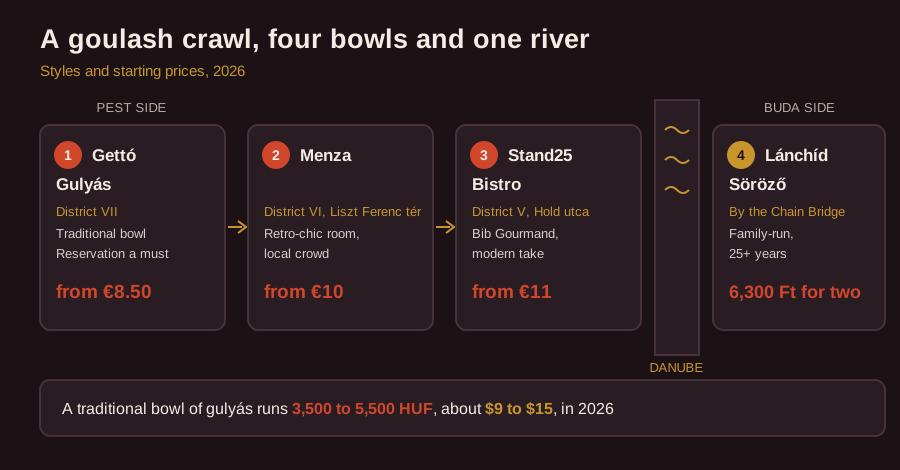
Start at Gettó Gulyás at Wesselényi utca 18 in District VII. It serves traditional goulash from about €8.50, and a reservation is not optional, it is a must. This is the bowl to calibrate your palate on before the fancier versions later in the day.
The name is a nod to the old Jewish quarter around it, and the room fills fast with a mix of locals on lunch break and visitors who did their homework. Offbeat Budapest ranks it among the city's best goulash and flags the reservation point in the same breath. Book two days ahead for dinner. The bowl arrives dark red, beef in soft cubes, and the paprika pearls my mother demanded are all present. Eat it with the fresh bread, not the menu's side dumplings; you have three more stops.
Which Bowls Are Worth It In The City Centre?
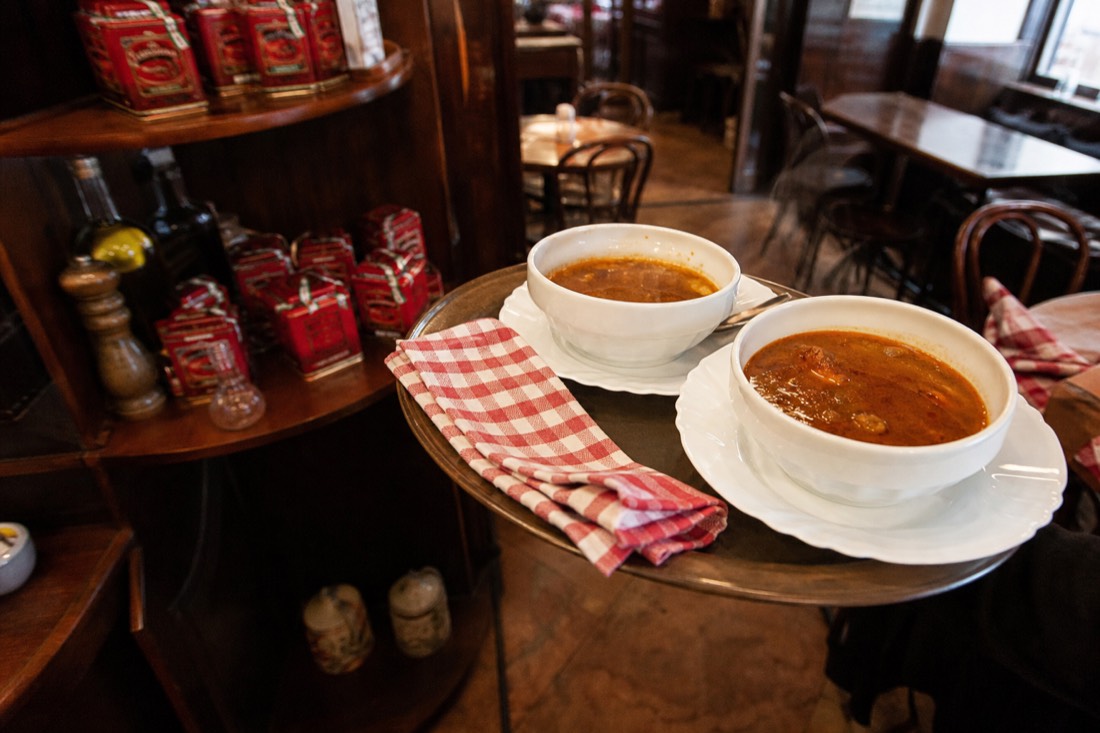
Two. Menza on Liszt Ferenc tér serves goulash from €10 in a retro-chic room locals still fill, and Stand25 Bistro on Hold utca, holder of a Michelin Bib Gourmand, starts its reimagined bowl at €11 with celery root, celery leaves and a whisper of lemon peel.
These two stops are a lesson in how far one soup can stretch. Menza plays the nostalgia card, all 1970s oranges and browns, and its bowl tastes the way school canteen gulyás should have tasted but never did. Stand25 goes the other way. The kitchen keeps the paprika-hued base and the tender beef cubes, then sharpens everything with celery and that faint lemon lift. Purists grumble. I think it is the most interesting bowl in the city, and the Bib Gourmand suggests the Michelin people agree. Mains at Stand25 run €20 to 28, so it is the splurge stop of the day.
| Style | Base | Texture | What arrives at the table |
|---|---|---|---|
| Gulyás (the real goulash) | Paprika beef broth | Thin, spoonable soup | Deep bowl, bread on the side |
| Pörkölt | Paprika meat stew | Thick, fork-friendly | Plate with nokedli dumplings |
| Tourist-menu "goulash" | Varies wildly | Anywhere in between | A gamble, often microwaved |
Is Crossing To Buda Worth It For One Pub?
Yes. Lánchíd Söröző sits by the Chain Bridge on the Buda side, family-run for more than 25 years, and serves goulash for two at 6,300 forints, about €16. Around Christmas there are queues out the door, which in Budapest is the highest compliment a kitchen gets.
The walk over the Chain Bridge is the palate cleanser. Lánchíd Söröző is small, cluttered with old enamel signs, and completely uninterested in trends. Time Out lists it among the city's best Hungarian restaurants and mentions the December queues; my father simply calls it "the pub" and has never seen a reason to explain further. The goulash for two arrives in one pot, and sharing it is the point. Order a small beer, sit by the window, and watch the bridge lights come on.
| Stop | Venue | District | Character |
|---|---|---|---|
| 1 | Gettó Gulyás | VII, Wesselényi utca 18 | Traditional, reservation essential |
| 2 | Menza | VI, Liszt Ferenc tér 2 | Retro-chic, local crowd |
| 3 | Stand25 Bistro | V, Hold utca 13 | Bib Gourmand, modern take |
| 4 | Lánchíd Söröző | Buda, by the Chain Bridge | Family-run, 25+ years |
How Much Should A Proper Bowl Cost In 2026?
A proper bowl of gulyás at a traditional Budapest restaurant runs 3,500 to 5,500 forints in 2026, roughly $9 to $15. Pay much less and you are probably getting a reheated tourist version; pay much more and you are paying for the room, not the soup.
That band comes from current reporting on traditional Hungarian dining, and my four stops confirm it from both ends. How the numbers spread across the day:
| What | Price | Note |
|---|---|---|
| Traditional restaurant bowl | 3,500 to 5,500 HUF ($9 to $15) | The honest citywide band |
| Gettó Gulyás | from €8.50 | Cheapest serious entry |
| Menza | from €10 | Mid-band, big room |
| Stand25 Bistro | from €11 (mains €20 to 28) | The splurge |
| Lánchíd Söröző | 6,300 HUF (€16) for two | Best value shared |
If you want the fuller picture of what meals cost here, our food price guide breaks down a whole eating day. For goulash the short version is simple: the best bowls in this city cost less than a London sandwich meal deal times two.
What Is The Difference Between Gulyás And Pörkölt?
Gulyás is a soup: paprika-red beef broth with potato and carrot, eaten with a spoon. Pörkölt is the thick stew most foreigners picture when they say goulash. Order both on your crawl and the confusion clears in two bites; the full story lives in our goulash guide.
I bring this up mid-crawl because it is exactly where the confusion strikes. You order goulash at stop two, a soup arrives, and you wonder if the kitchen made a mistake. It did not. The thick version exists, it is wonderful, and it is a different dish with a different name. Half the paprika you will taste today was bought at the Great Market Hall, and if you want to see where the cooks shop, my morning at the market walks through those stalls before the crowds.
Can A Guided Walk Cover Goulash In One Afternoon?
A guided walk introduces several Hungarian dishes in one outing rather than recreating the four-kitchen crawl. Carpe Diem’s current route lasts 150 minutes; Foodapest’s lasts three hours.
Doing the full independent crawl takes most of a day. A guided food walk is a different format: several Hungarian dishes along a planned route, rather than a comparison of all four kitchens in this article.
What Mistakes Ruin A Goulash Hunt?
Three mistakes ruin most goulash hunts: ordering it at a terrace restaurant with a picture menu, expecting a thick stew and sending back a perfect soup, and skipping the reservation at the small places. Book ahead, expect broth, and stay off the main squares.
The picture-menu places cluster along Váci utca and the castle approaches, and their goulash has usually seen a freezer. The small kitchens that care will be booked at dinner, Gettó Gulyás above all. And the soup thing: I have watched a visitor at the next table send back a beautiful bowl because "goulash is supposed to be thick". The waiter's face stayed polite. His eyes did not. Learn the two names, trust the broth, and let the paprika pearls on the surface tell you when a kitchen deserves your forints.
Choose Your Budapest Experience
Foodapest Market To Tavern. Traditional dishes, street-food tasters and wines with an English-speaking local guide. Have a date in mind? Check it before arranging the rest of your Budapest day.
180 minutes. Daytime option visits the market; the 17:00 option skips it. Notify the operator about vegetarian or vegan substitutions. Not suitable for coeliac requirements.
Choose a date to see scheduled departures. Final availability and price are confirmed on Viator.
No verified experience fits those requirements. Adjust your choices, or keep the independent plan described above.
Compare Options And Fit Your Plans
General recommendations until you choose. Sightseeing cruises use recorded commentary; the dinner cruise has no guide. All selected activities meet in central Pest; use the operator confirmation for the exact point and option.
- Goulash Cooking At Chefparade: 180 minutes. Make goulash soup, a paprika main and apple strudel in a hands-on three-course cooking class. Age 6+. Studio address is confirmed as Páva utca 13 or Bécsi út 27. Vegetarian menu on request; confirm the menu and dietary requirements before booking.